
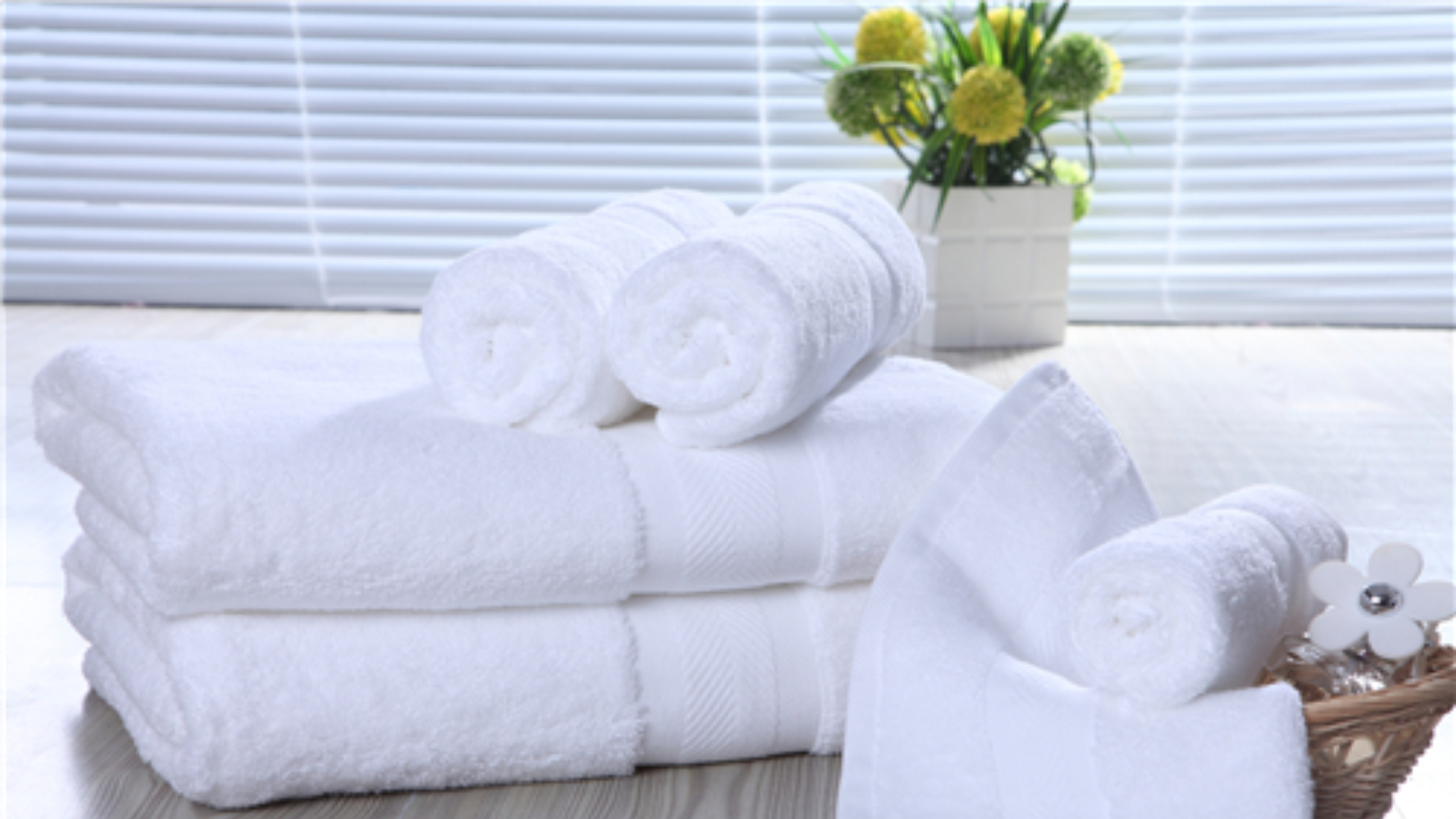
The grayness and yellowness of the hotel and hospital linen not only affect the appearance but also give a negative impression that the cleaning is not complete to customers. The causes of grayness and yellowness can be divided into two types: incomplete cleaning and residues of special stains. They should be treated differently.
Grayness Issues
The overall linen is dull and gray. The core reason is that the dirt or residual impurities haven’t been totally removed.
● Insufficient washing
The inadequate detergent dosage, excessively low washing temperature, and excessively short washing time lead to the incomplete decomposition of dirt such as dust, grease, and sweat on the linen surface. High water hardness (calcium and magnesium ions) easily forms calcium-magnesium salt precipitates during washing, which adhere to the linen surface and rob it of its original luster.
● Residual deposition
The detergents’ own impurities or insufficient rinsing after washing can leave behind residues of detergent components, like surfactants and anti-precipitants. These residues combine with airborne dust, accumulate over time, and result in linen graying. Additionally, residual dirt inside the dryer drum during the drying process can cause secondary contamination of the linen.
Yellowness Issues
The causes of yellowing are different in different scenarios. People should identify the stain types.
● Yellowing of hotel linen
It is mainly caused by many daily stains: blood stains, urine stains (on bed sheets and pillowcases), fruit stains, wine stains (on tablecloths and napkins), cosmetic stains (on towels and pillowcases), and ink stains.
If these stains are not treated properly in time, they will form stubborn yellow marks on the linen. Moreover, exposure to air for a long time will cause them to oxidize and turn dark. At that time, it is more difficult to remove them.
● Yellowing of medical linen
It is mostly associated with stains related to medical procedures: patient excreta, drug residues, iodophor-based disinfectant stains, and residues from waterless hand sanitizers. These stains have complex compositions, and some contain strong oxidizing substances. They easily cause yellowing and badly affect the effectiveness of the following washing and disinfection.
Solutions
To solve grayness and yellowness, professional bleaching products are needed to remove stains and brighten linen without causing damage. The commonly used products include oxygen bleach powder and chlorine bleach powder.
● Oxygen bleach powder
- Characteristics
It has strong functions: remove stains, decontaminate, bleach, disinfect, and sterilize.
Also, it is mild, and it does not damage fabric fibers. It has great solubility and anti-hard water ability, and it effectively breaks down stubborn stains. It is especially suitable for white or light-colored linen to restore its whiteness.
- Applicable scenarios
Stain removal and bleaching of white fabrics in hotels, factories, hospitals, public institutions, and other settings, such as white bed sheets, white lab coats, and white towels.
- Standard dosage and operation
It should be used in the main wash cycle. There is no need for a separate bleaching stage.
The washing temperature should be at 70 to 80℃ → the washing time ≥ 5 minutes → main wash for 8 to 10 minutes → add 10 to 50 grams per 10 kg of dry fabric according to the degree of soiling → continue washing for 6–8 minutes → rinsing → dehydration → drying.
● Chlorine bleach powder
- Characteristics
Despite stain-removing and bleaching functions, it can decompose special dirt through oxidation and peptization. This helps improve the cleaning effect of detergents. It has a targeted removal effect, especially on stubborn stains such as blood stains, urine stains, and iodophor stains.
However, chlorine bleach powder has strong oxidizing properties and is only suitable for white cotton fabrics. It should not be used on colored or chemical fiber linen to prevent fading.
- Applicable scenarios
Removal of stubborn stains from white medical linen (e.g., white lab coats, white bed sheets) and white hotel linen (e.g., white tablecloths).
- Usage precautions
The dosage and temperature should be strictly controlled to avoid fiber damage caused by excessive concentration or high temperature.
After use, enough rinsing is needed to avoid chlorine from corroding the linen. When used with other detergents, they should be added at intervals to avoid chemical reactions that may badly affect the cleaning effect.
Conclusion
Damaged linen fibers, grayness, and yellowness may seem like a small problem. Actually, they reflect the loopholes in the details of the washing process. The composition of chemicals, the parameter setting of the equipment, the identification of the stains, and the selection of products all may cause frequent problems due to negligence in each link. For linen laundry companies, a closed-loop management system from “problem tracing – solution matching – standard implementation” should be established. On the one hand, risk points in the washing process should be checked regularly. On the other hand, staff training should be strengthened to improve staff’s ability to identify stain types and the mastery of product usage norms.
CLM laundry equipment, as a professional partner of the linen laundry industry, not only provides high-efficiency laundry equipment, but also combines with the companies’ actual washing scenarios to provide an integrated solution of planning, equipment, and operation norms. This helps reduce linen damage rate, improve washing quality, and reduce operation rates for companies. If you encounter any complex laundry problems in practical operations, feel free to consult the CLM professional technical team for targeted guidance.
Post time: Dec-30-2025