

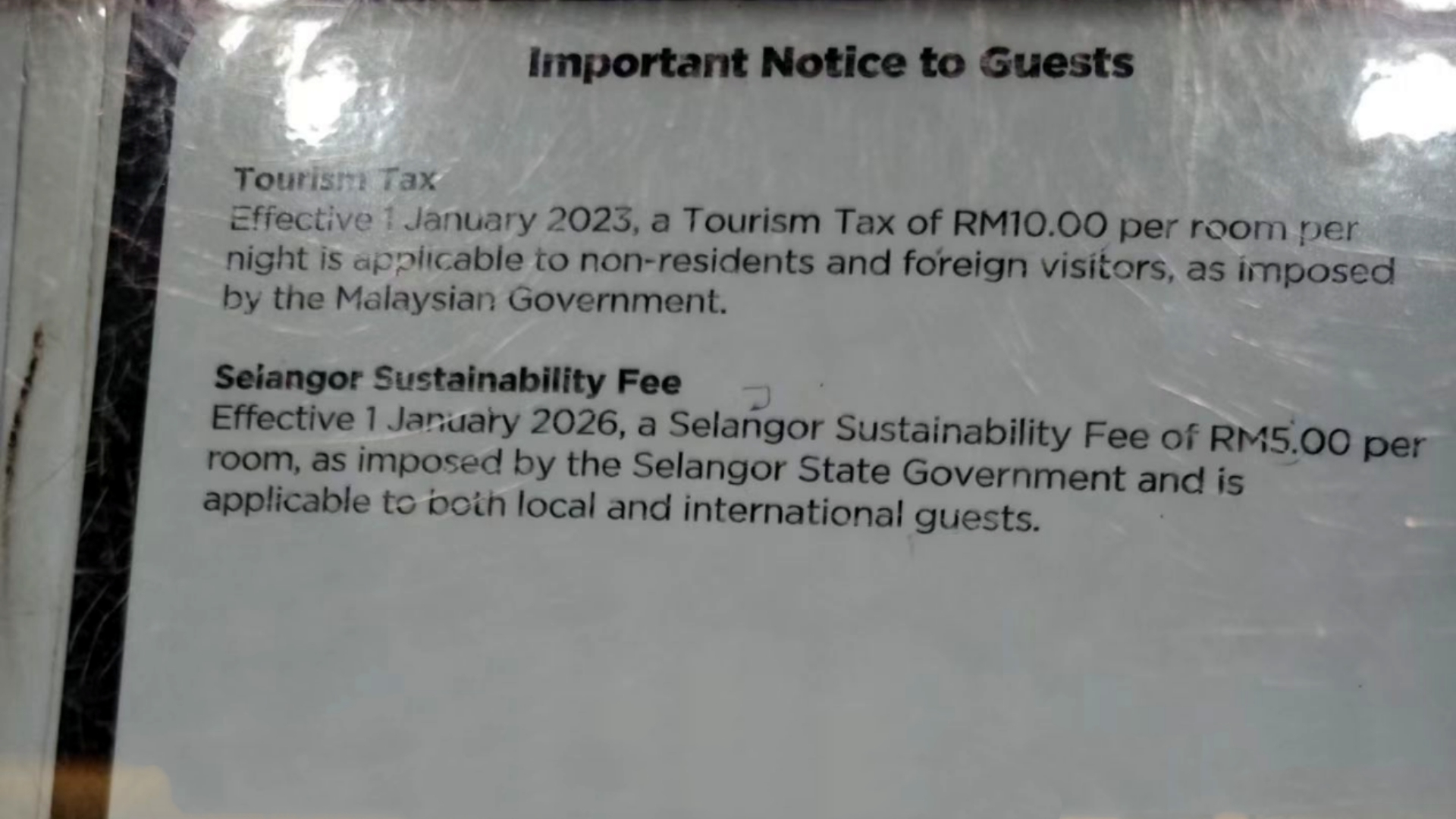
Starting January 1, 2026, the state of Selangor, Malaysia, will impose an environmental fee (also referred to as the “sustainability fee”) on hotels.
According to public information, the specific rates are as follows:
5-star hotels: 7 ringgit per room per night
3-star hotels and below: 5 ringgit per room per night
Homestays (e.g., Airbnb): 2 ringgit per room per night
This fee is collected by hotels or homestay operators on their behalf and is mainly used to support sustainable tourism development, including the maintenance of tourism facilities, environmental protection projects, and tourism promotion, etc. The specific collection standards may change according to the adjustment of the policies. Since its official implementation, local hotel linen laundry factories should have felt the dual pressure of cost and compliance from hotel customers. This policy is just like a strong blast wave that directly spreads along the industrial chain to every laundry factory.
Three Cost-Cutting Strategies of Hotels
To understand the challenges faced by laundry factories, we must first understand the action logic of laundry factories’ customers, hotels. In the condition that hotels must pay an additional 2 to 7 ringgit per room per night and cannot pass on all of it to the guests, hotels must turn on a comprehensive cost-cutting mode. Its impact will directly affect laundry orders:
● Usage frequency of linen
To reduce the amount of linen to be washed, hotels will more actively promote the “Green Stay Program”, which encourages guests to reuse towels and bed sheets. This means that even if the occupancy rate doesn’t change, the frequency and quantity of linen washing definitely decline, especially in laundry factories whose main business source is daily change.
● Purchase cost budget
Hotels will more strictly review all purchase projects. When renewing contracts, bargaining will become common and tough.
Simple relationship maintenance will become fragile in the face of clear financial indicators, and the quotation model that the laundry factory relied on in the past may not be sustainable.
● Supply chain qualification
Hotels still need to show their environmental protection efforts to guests who have paid the relevant fees. Therefore, they will not only consider the price but also ask the suppliers to provide green certificates.
Laundry factories that cannot prove their eco-friendliness, energy conservation, and standardization, even if they offer low prices, may still be excluded from the supply chain by mid-to-high-end hotels that pursue compliance and brand image in the future.
The Way Out for Laundry Plants
Passively accepting the squeeze will only make the path narrower and narrower. The true road is actively helping the hotels solve their new problems so as to redefine the services of the laundry from a cost to a value. This needs the laundry factory to innovate from internal operation to external cooperation.
Laundry factories should not only rely on lowering profits to meet customers’ price demands. Instead, they should create profit margins and competitiveness by reducing their “comprehensive unit laundry cost”.
● Core investment
Seeking benefits from high-efficiency and low-energy-consuming intelligent laundry plants is the physical basis of the transformation.
An integrated intelligent washing solution, such as a tunnel washer equipped with precise quantitative water addition, steam heat energy recovery, intelligent drying, and automated sorting systems, can achieve:
- Direct cost reduction
The water consumption per unit of linen, steam energy consumption, and labor cost have decreased by more than 30%, which is the most solid “moat” to deal with price wars.
- Quality and stability
Standardized programs ensure zero difference between washing quality, reduce the potential costs caused by damaged linen, and customer complaints.
- Data support
Real-time monitoring of energy consumption and water consumption provides evidence for environmental protection.
● Management upgrade
Optimize the logistics to reduce transportation costs.
Promote lean production to reduce the waste in laundry plants.
Establish a scientific linen service life management system to help reduce the linen damage rate.
Conclusion
The environmental protection fee in Selangor is actually a notice of transformation and upgrading that the market sent to the entire laundry industry. It marked the end of the old model that relied on low-cost labor, extensive management, and high resource consumption. The future winner will surely be laundry enterprises that can first arm themselves with smart devices, communicate value in the language of data, and bind customers with professional services.
The challenges are drawing near, but opportunities are also emerging. This industry reshuffle is quite an important window period for laundry factories to widen the gap with their competitors and build long-term core competitiveness with their foresight and actions. The CLM intelligent laundry plant solution can help you transform this notice into a leading advantage and build a reliable foundation for lasting competitiveness.
Q1: How to maintain prices when hotels use environmental fees to bargain?
A1:
● Evidence
Laundry plants can give comparisons of energy and water consumption data to prove efficient operations.
● Total costs
Laundry plants should help clients understand the full linen lifecycle cost and explain that high-quality laundry services reduce linen damage and save money in the long run.
● Flexible packages
Long-term contract discounts or value-added linen management services can shift focus away from pure pricing.
Q2: What direct impacts will laundry factories face on their orders after the imposition of the hotel environmental fee in Selangor, Malaysia?
A2: Orders will be mainly affected by three “constraints”:
● Linen washing frequency and volume are reduced. (Hotels promote green stays and encourage reuse)
● Hotels take a tougher stance on price negotiations during contract renewals, so traditional pricing models are unsustainable.
● Mid-to-high-end hotels will need laundries to provide environmental qualifications.
Q3: How should laundries solve cost and compliance pressures brought by the environmental fee?
A3:
● Introduce intelligent laundry solutions (such as tunnel washers) to reduce water, electricity, and labor costs by more than 30%.
● Support environmental compliance with data.
● Optimize management (logistics, lean production) to cut waste and help hotels lower linen loss.
● Bind customers with eco-friendly and efficient services, and shoulder the green transformation needs of hotels.
Post time: Mar-19-2026