
In the production line of laundry plants, the ironer is a key machine to ensure linen flatness and production efficiency. How should the ironer condensate return pipeline be installed — overhead or underground? This article will discuss this question.
The Importance of Condensate Return Pipeline
During operation, the ironer steam heats linens through rollers. Condensate is generated after heat release. It should be discharged in time through a steam trap. Otherwise, it lowers heat transfer efficiency. Linens become wet, and energy consumption increases. The drained condensate should be transported back to the recycling system (such as the boiler feedwater tank or the condensate recovery tank) through the return pipeline. The installation method directly affects the later drainage, system, and maintenance.
Overhead Condensate Return Pipeline
Install the condensate return pipeline along plant walls, uprights, or special brackets. The allowable back pressure of the steam trap is essential. The drainage capacity of the steam trap determines whether condensate is lifted to the overhead pipeline or not. This is referred to as the “discharge head”. The exit of the steam trap can overcome the water column height corresponding to the back pressure.
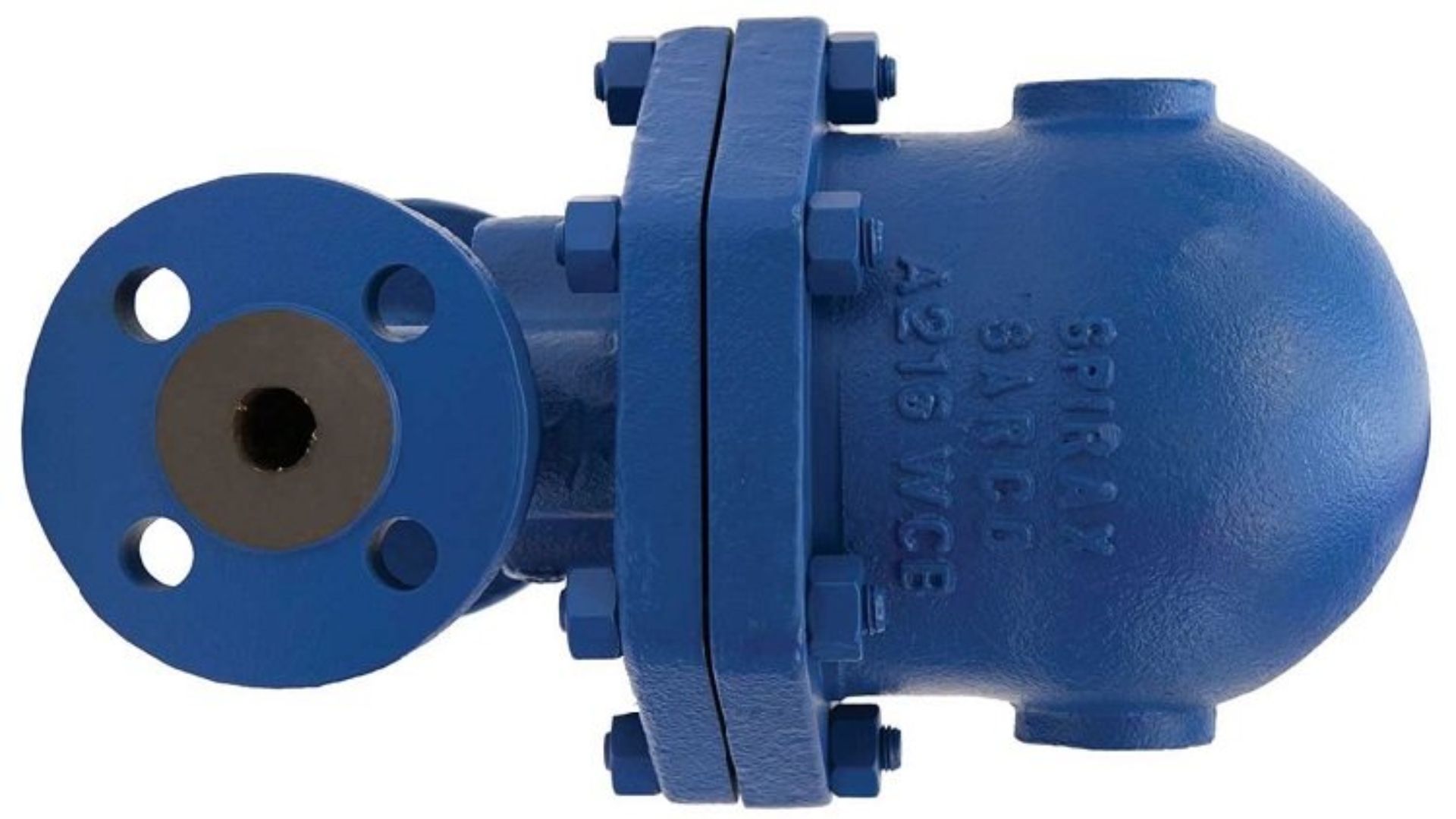
Take the Spirax Sarco steam trap used by Kingstar as an example. The discharge head reaches over 3.5 meters. Proper direction allows condensate to enter the overhead pipeline. Depending on the gravity, it can reflow to the recovery point.
● Materials
– Seamless steel pipe
High strength, heat and pressure resistance. It is suitable for steam condensate systems.
– Stainless steel pipe
Corrosion resistance and long service life. But it requires high costs.
– Galvanized steel pipe
The condensate temperature is high. It may contain oxygen. This accelerates galvanized coating damage and pipeline corrosion, causing leakage and blockage.
● Advantages
– Convenient to maintain
Pipelines are exposed. Leakage point and thermal insulation damage are noticeable. It is convenient to maintain the pipelines.
– Anti-corrosion
Pipelines are away from the ground and water. This reduces outer corrosion risks.
– Simple installation
There is no need to dig the ground. This does not affect the plant foundation.
– Easy to keep the slope
The slope should be at least 1% tilting in the recovery direction. This ensures smooth drainage.
● Disadvantages & Cautions
– Vehicles, equipment, and lights in plants may limit the installation.
– It is necessary to carry out thermal insulation measures (such as rock wool and rubber plastic). This avoids scalds, heat loss, and drips.
– Pipe support should be stable to avoid vibration.
Underground Condensate Return Pipeline
The second solution includes two forms: directly install underground and groove to install pipelines. Slope and waterproofing are important. The underground pipelines must have a sufficient slope (≥0.5%-1%). Otherwise, condensate is easy to accumulate at the bottom of the pipeline. This leads to water accumulation or water hammer. It may even cause the steam trap not to drain normally. Meanwhile, install drainage facilities for trenches. This prevents rain or cleaning water from flowing backward.
● Materials
– Stainless/seamless steel pipe
Stainless steel pipe has corrosion resistance. Seamless steel pipe requires anti-corrosion coating.
– Galvanized steel pipe
The galvanized coating is easily damaged in wet and hot soil. It may rust within several years.
– Thermal insulation materials
It prevents heat from being lost. After the condensate cools, the siphon phenomenon may occur. This material also protects pipelines from moisture.
● Advantages
– Beautiful & neat
There are no blocks on the ground. It is convenient to clean and transport.
– High water delivery efficiency
Condensate directly flows downwards into the underground pipeline.
● Disadvantages & Cautions
– Strict requirements
Every stage needs monitoring (digging, finding slope, corrosion resistance, thermal insulation, backfill, and pressure test).
– Difficult maintenance
Leakage enables laundry plants to dig the ground. This wastes operational time and energy.
– Corrosion risk
Pipelines are affected by wet soil and underground electricity. Their service life is shorter than that of overhead pipes.
Compared with direct underground installation, the trench solution has extra requirements for plant foundation and space. Dust and water are easy to accumulate, becoming hygienic dead zones.
Selection Methods
Prioritize the overhead condensate return pipeline. Most laundry plants have sufficient building height (over 4 meters). There are not many overhead barriers. This allows them to use the overhead condensate return pipeline. This solution is reliable, economical, and easy to maintain. Use walls or uprights to set pipelines. Control the height (at least 2.5 meters) to ensure forklift passage. Carry out thermal insulation measures. Measure the trap discharge head height (higher than the pipeline peak height). This ensures long-term stable operation.
Some laundry plants have low building height (below 3 meters). There are vehicles, air ducts, and cable trays that are unavoidable. This allows them to use underground solutions. Plants should pay attention to the following points.
– Commission professional teams to install. They can ensure the slope, corrosion resistance, and thermal insulation.
– Use stainless steel pipe or high-quality seamless steel pipe with intensive corrosion resistance.
– Support maintenance. Use the trench solution, not direct underground installation. It is convenient to inspect later.
● Cautions
– Install blow-off valve or sewage outlets at the end of condensate return pipelines regardless of overhead or underground solution.
– Prevent the pipeline direction from being U-shaped or upward curved, reversed U-shape. This may develop an air resistor.
– Regularly check the operation of the steam trap.
– The original underground steam trap is made of galvanized material. Blockage or leakage frequently occurs. Replace it with overhead pipelines.
Kingstar hopes this article will help laundry plant operators make more scientific future strategies.
Q&A
Q1: What’s the steam trap brand of the Kingstar ironer?
A1: The UK Spirax Sarco steam trap.
Q2: How much steam does a Kingstar 650 series 8-roller ironer consume per hour?
A2: It consumes around 300 kg of steam per hour.
Q3: What’s the drying drum material of the Kingstar high-speed ironer?
A3: It is made of premium boiler carbon steel. It has higher strength than stainless steel.
Post time: Jun-25-2026