
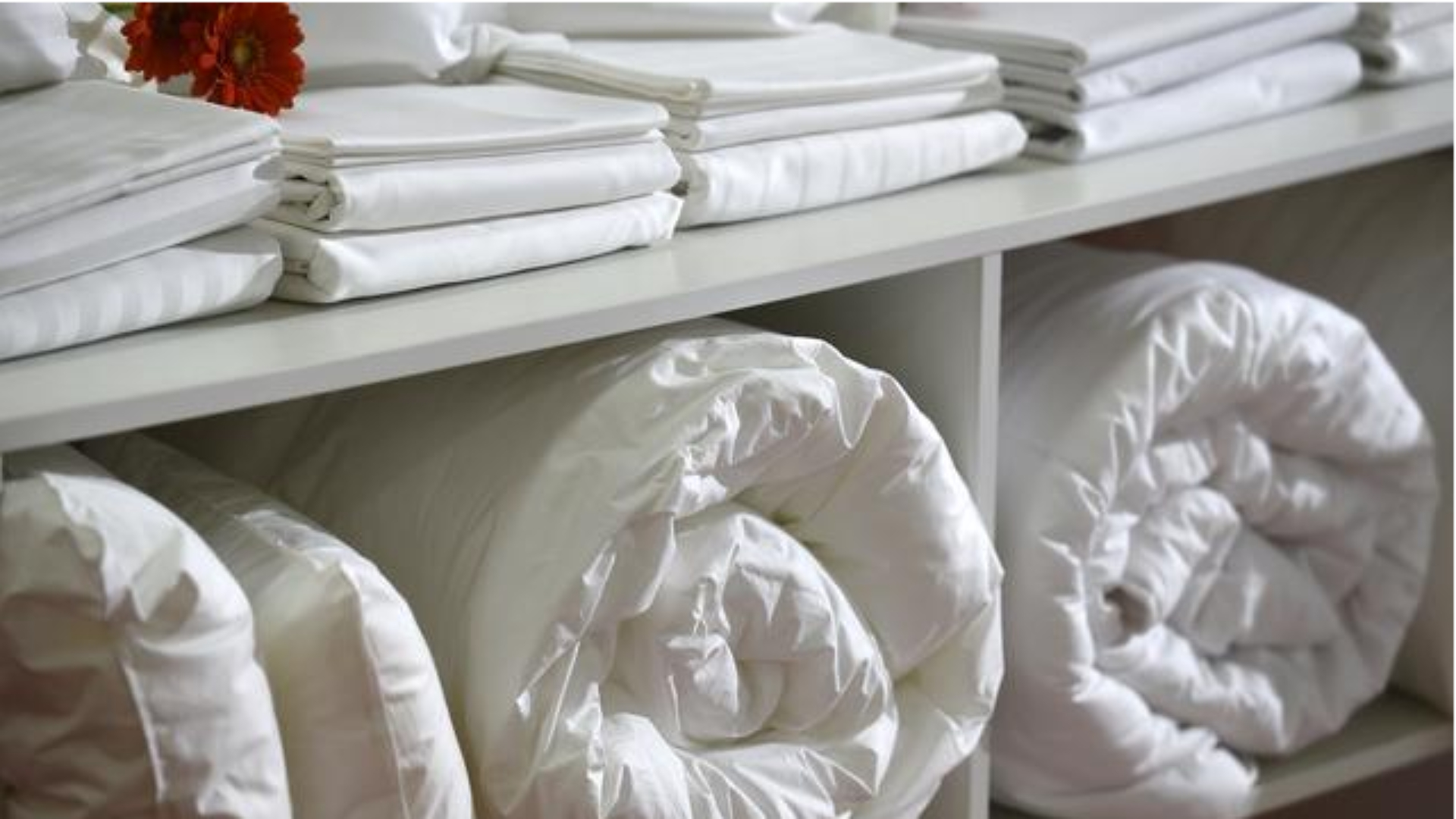
In hotel laundry operations, linen cleanliness, softness, whiteness, and durability are the core for service quality. They are also key factors for customer experience and brand reputation. Currently, most laundry plants and hotel laundries lack standardized washing processes. There are non-standard washing methods, such as mixed yarn counts and unified water temperatures and processes. They easily lead to linen pilling, stiffening, color fading, deformation, and shortened service life. This greatly increases the replacement costs of hotel linen.
Yarn counts directly affect the hotel linen quality. Different yarn counts vary greatly in fiber thickness, weave density, and durability. Differentiated control is required for wash temperature, mechanical action, laundry processes, and chemical dosing ratios.
Kingstar is a professional integrated provider of smart laundry equipment. It specializes in the R&D of industrial laundry equipment and smart laundry plant planning. Kingstar provides comprehensive smart machines, including tunnel washer systems, high-speed ironing lines, and overhead bag conveyor systems. With star-rated hotel linen washing experience, it concludes the washing standards for different yarn counts. Kingstar helps laundry businesses achieve standardized, refined, and smart washing. This not only extends the linen service life but also reduces their operational costs.
What is Yarn Count
Yarn count (Ne) is a core indicator of linen quality and laundry demands. Higher yarn counts indicate finer threads and higher weave density. So linens have a softer hand feel and a better look. These fabrics are often used in high-end star-rated hotels. But their delicate fibers require a high laundry standard. Lower-count fabrics indicate thick threads. They are thick and wear-resistant. They are suitable for standardized washing in a bulk batch. And they have a higher tolerance for errors.
At present, there are two main linen categories: low- and medium- count fabrics (60s/40s and 60s/60s) and high-count fabrics with high density (80s/80s, 80s/100s, and 100s/120s). The former is durable and wear-resistant. It is suitable for batch washing. The latter has a fine texture. It requires refined care and damage prevention.
Linen Washing Standards
● Low & medium yarn counts
This fabric is mainly made of cotton and polyester-cotton blends. It is cost-effective and wear-resistant. It is a first choice for most hotel linens. It can be used in a scaled and high-efficiency industrial laundry site.
– Water temperature
Set the prewash temperature at 35-40℃. Remove floating dirt on the fabric surface for 3-5 minutes. The main wash temperature can be set at 60-70℃. It ensures stain removal and disinfection. Fiber damage can be minimized. After the first rinse at 40℃, use cold water rinse for the next stages. Perform pH neutralization using 40℃ water. It avoids linen stiffening. Keep the drying temperature at 60-65℃.
– Laundry process
Sorting → Prewash → Main wash → Medium extraction → Second rinse → Neutralization → High extraction → Drying & ironing → Storage.
It is recommended to use mildly alkaline detergents. For example, chlorine bleach can be applied to white linens. Oxygen bleach is suitable for colored linens. The equipment load capacity should be controlled within 70%-80% to ensure mechanical action for cleaning. A Kingstar tunnel washer system precisely matches this process. It can achieve batch and continuous laundry. It ensures both cleaning efficiency and linen durability.
● High yarn counts with high density
High yarn counts are specially used for high-end star-rated hotel linens. This fabric is known for its fine fibers, tight weave, and excellent whiteness. However, pilling, deformation, and the loss of luster can easily occur due to high temperature, strong mechanical actions, and residual detergents. So its core laundry principle is low temperature, gentle actions, and no chemical residue.
– Water temperature
80s/80s fabric: prewash temperature 35℃, main wash temperature ≤70℃;
80s/100s fabric: prewash temperature 30-35℃, main wash temperature 60-65℃;
100s/120s fabric: low temperature for the entire process. Set the ambient temperature for prewash. The main wash temperature should be lower than 60℃. Reduce both rinse and drying temperature. This can avoid fiber shrinkage and damage.
– Laundry process
Separate sorting → Spot stain removal → Low-temperature prewash → Gentle main wash → Short-time medium-speed extraction → Rinse 2-3 cycles → Neutralization → Low-speed extraction → Low-temperature & slow drying → Low-temperature ironing → Storage.
During the entire process, use neutral detergents. High alkaline detergents and strong chlorine bleaching are prohibited. Reduce the equipment spin speed. And ensure the load capacity is below 70%.
Kingstar smart laundry equipment can meet high-end linen laundry requirements. They allow customers to program washing cycles (precise temperature and spin speed control). Smart overhead bag conveyor systems enable smooth linen transfer. High-speed ironing line ensures low-temperature and even-speed ironing. This entirely maintains the fine textures and luster of high-count linens. Human operational errors are prevented on the equipment side.
Core difference:
|
Yarn Count |
Main Wash Temperature |
Washing Mode |
Rinse Cycles |
Drying Temperature |
Keys |
|
60s/40s |
60-70℃ |
Standard Mode |
2 |
60-65℃ |
washable, regular stain removal, avoid high alkalinity detergents |
|
60s/60s |
60-70℃ |
Standard Mode |
2 |
60-65℃ |
finer than 60s/40s, avoid long-term and high-temperature washing |
|
80s/80s |
65-70℃ |
Gentle Mode |
2-3 |
60-65℃ |
avoid mixed washing, use neutral detergents, control the load capacity |
|
80s/100s |
60-65℃ |
Gentle Mode |
3 |
Around 60℃ |
protect fibers with low temperature, use laundry bags to reduce friction |
|
100s/120s |
55-60℃ |
Gentle Mode |
3 |
55-60℃ |
low temperature for the entire process, no chlorine bleaching, separate refined washing |
Q&A
Q1: Can high- and low-count linens be washed together?
A1: Mixed washing is not recommended. Fabrics with low and medium yarn counts are coarse. Fabrics with high yarn counts are delicate. Mixed washing leads to pilling and color transfer. It is suggested to do separate sorting and zone washing. Linens can be sorted and transferred by a smart logistics system. It helps avoid cross-damage.
Q2: What is the key to washing high-count linens?
A2: Low temperature, gentle mechanical actions, and no residue. Control the main wash temperature. Choose the gentle mode. And perform low-speed extraction. Increase rinse cycles. Use neutral chemicals to protect fibers from damage by high temperature and strong mechanical actions.
Q3: What advantages does smart washing equipment have compared with traditional machines?
A3: According to different yarn-count fabrics, Kingstar smart washing equipment has customized washing cycles (precisely control the wash temperature, time, and spin speed). Standardized operations provide good linen washing results, which reduces the damage to fabrics and human errors.
Post time: Jul-15-2026