
In recent years, labor costs have continued to rise. Environmental regulations are becoming stricter. The quality requirements of customers continuously increase. The linen washing industry is quickly entering “the intelligent era”. More and more laundry plants start to transit from traditional facilities into smart plants.
However, there are numerous laundry equipment suppliers. They claim to provide “one-stop solutions”. After actual delivery, lots of problems come up. Tunnel washer systems cannot match the production pace of ironing lines. Energy consumption in steam systems is difficult to control. Communication failures between machines frequently occur. Front-line workers are unable to operate the equipment.
Facts show that smart laundry plant integration is not about connecting different machines and installing a central control screen. A real system integrator should have comprehensive capabilities, including process expertise, equipment, thermal energy, software, and operational management. Kingstar is an OEM-based system integrator. It has several years of experience in the laundry equipment area. It believes that a valuable system should be built on the five core capabilities below.
Laundry Process Expertise
A qualified system integrator deeply knows that:
linen processing costs per ton (water + electricity + steam + labor) ≤ processing fee – rewash/damage costs.
All smart designs should aim at reducing costs and improving efficiency.
A system integrator should be familiar with the required standards in different tracks (hotel linen, healthcare laundry, and garment rental). For example, healthcare linen should meet the A0 disinfection value requirements. Hotel linen should meet cleanliness and pH requirements. At the same time, a system integrator should know the hidden standards of the laundry process. Tunnel washer systems should match the ironing line throughput. The real cause of low drying efficiency lies in steam trap blockage or excessive exhaust airflow, rather than insufficient power. Steam pressure and heat transfer efficiency are connected. The production experience is essential to designing a practical system for customers.
Full-Chain Planning Capability
Most issues are hidden before a plant is built. A steel-structure facility does not take thermal insulation measures. In summer, the temperature reaches more than 45℃ in the workshop. Improper steam pipeline direction leads to over 30% heat loss during the process. Insufficient drainage slope leads to groundwater all year round. These issues make the rebuilding costs 5-10 times higher than the initial costs.
A system integrator should provide professional services during construction, including facility load capacity, air change rate, drainage/steam/cable channel space, and pre-treatment areas. More importantly, it can ensure the matching among capacity, techniques, and energy consumption. For example, the yearly capacity of hotel linens is 6,000 tons. A system integrator should deduce the specification of a tunnel washer system, the configured number of finishing lines, and the remaining steam load capacity. Whether an excess heat recovery system is needed. How can a hanging bag system be designed to avoid linen overstock? Professional capabilities enable customers to get their investment returns.
Independent R&D & Manufacturing Capability
This is a key to distinguishing an OEM-based system integrator from a trade-type system integrator. The latter competes on channel prices and compatibility adjustment. Once issues occur, they shift the blame to each other.
Having the R&D and manufacturing capacities of the core equipment, a system integrator can achieve the following:
● Equipment suitability
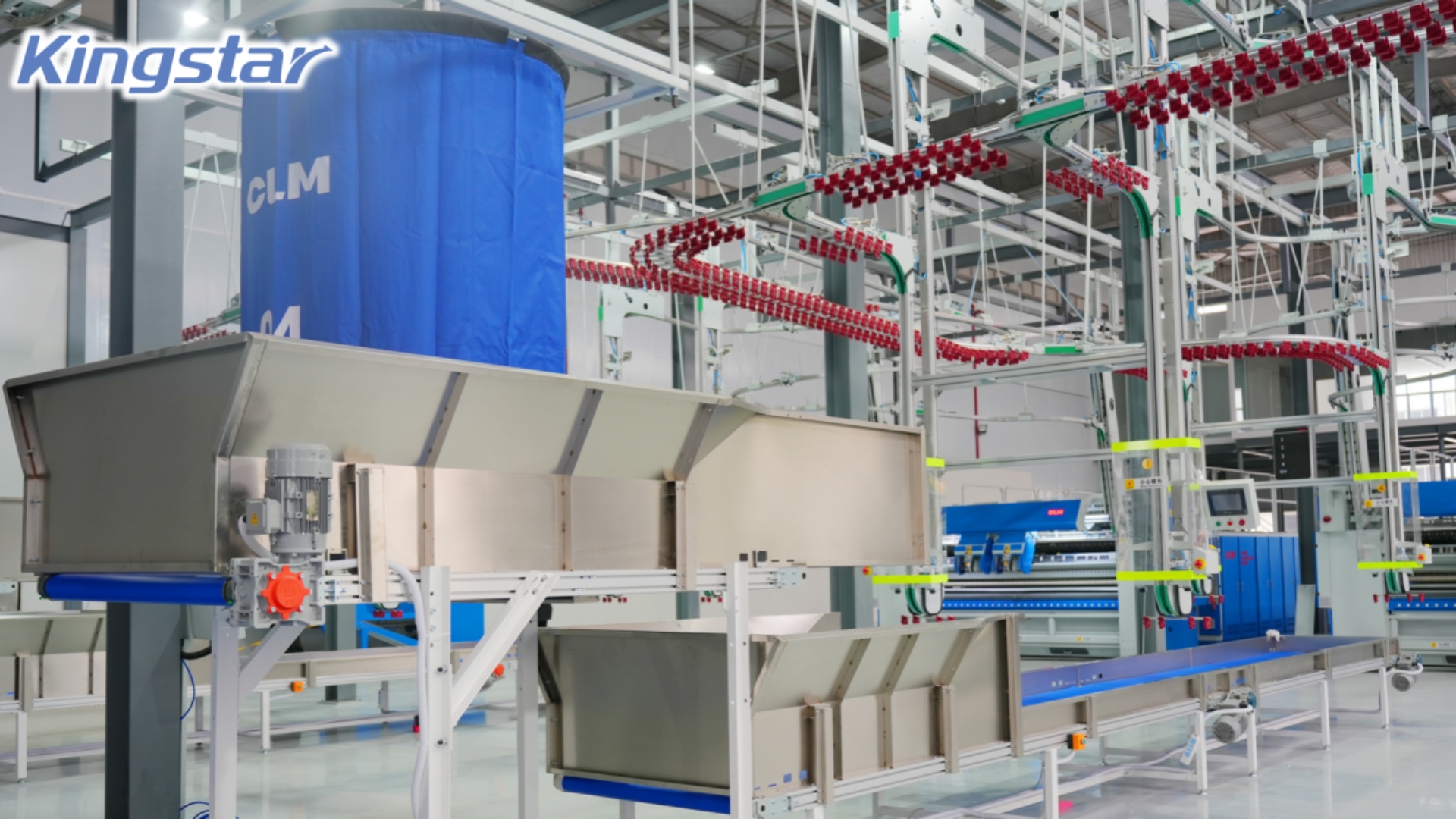
Tunnel washer systems and high-speed ironing lines fully match hanging bag systems. This avoids linen blockages caused by out-of-sync signals.
● Integrate pain points into the equipment
Kingstar dryers use a full-body thermal insulation design. Ironer cylinders and steam pipelines lock temperature. These designs are not added later. They are integrated into the equipment design before products leave the factory. This reduces system energy consumption and heat emission in workshops at the source.
● Reliable after-sales service
Core components are made by the system integrator. There’s no need to wait for a third-party supplier’s schedule. Failure response speed and service management far exceed the trade-type system integrator.
System Integration Capability
A laundry plant has different types of systems: mechanical machines (tunnel washer and ironer rollers), thermodynamic systems (steam, hot water, drying, and exhaust air), and low-voltage digital systems (RFID tracking, hanging bag conveying, and energy consumption monitoring). Front-line workers with different educational levels should clearly know how to operate them.
A system integrator should integrate these systems into a whole. On the hardware side, it can connect the equipment to the network cables. It should also know the pressure grading design of steam pipelines and condensate recovery systems. On the software side, reduce the burden on the digitalization system. A MES system full of data on the screen is not required. Hanging bags should automatically allocate available positions. Machines have automatic alarm systems. Energy consumption can be calculated without human intervention. Plants can make paperless settlements with customers. All system functions should apply to the current staff structure.
End-to-end Operational Capability
The final goal of a system integrator is to enable customers to achieve stable profitability rather than providing a sample. After delivery, monitor the production for at least 1-3 months. Production flow should be smooth. Energy consumption should meet the requirements. Front-line workers can operate machines. Processing costs per ton are controlled in a budget.
A system integrator should also have updating capabilities. Customers may accept new linen types. Production capacity increases by 20%. The environmental regulations are becoming stricter. Systems should quickly expand. Kingstar has customer cases of several similar laundry plants. It can provide practical solutions for customers.
Conclusion
Kingstar is an OEM-based system integrator. It focuses on the R&D and manufacturing of tunnel washer systems, high-speed ironing lines, and overhead hanging bag systems. It also provides design services for smart laundry plants. Kingstar believes that it offers a production operational system. It is risk-controlled and has predictable profitability.
Kingstar is committed to using the five core capabilities, from facility planning to equipment delivery, from system coordination to operational management. It helps customers achieve their goals: reducing energy consumption, increasing productivity, and retaining skilled workers. This is the real value of a smart laundry plant.
Q&A
Q1: Why do laundry plants choose Kingstar, an OEM-based system integrator, rather than using machines from different brands?
A1: Choosing different machines leads to system compatibility and responsibility issues. Tunnel washers may mismatch ironing lines. The energy consumption of the steam system may exceed the standards. Equipment suppliers easily shift blame. Kingstar independently develops and manufactures core laundry machines. Communication protocols are integrated with control logic. This ensures stable system operation. It is also responsible for all system problems. There is no need to be concerned about after-sales services.
Q2: My plant has been built and is running. Can it be upgraded?
A2: Yes. Kingstar provides smart reform services for old laundry plants. It will first analyze the plant’s current equipment layout, steam systems, and energy consumption. Then it will make phased reform solutions. Start from the low-cost and high-return measures, such as pipeline thermal insulation and steam trap system optimization. Gradually promote equipment upgrade and digitalization system layout.
Q3: Does Kingstar have any service support in the overseas market?
A3: Yes. Kingstar has overseas service systems, including remote technical support, overseas spare parts warehouses, and local cooperation service networks. The equipment has multi-language systems. Kingstar also provides customized operation guidance. Customers worldwide can get prompt and professional services.
Post time: Jul-16-2026