

Hotel linen is a core carrier for the service quality and customer experience. Its full life-cycle management directly affects a hotel’s operational costs and brand reputation. High-efficiency linen management should establish a collaborative chain between internal hotel operations and professional services at the laundry plants. Both parties should clarify the responsibility and collaboration standards, especially in the recycling of soiled linen, treatment for special stains, inspection of the clean linen and other key links. This article is based on the practice of linen management in high-star hotels, analysing 12 core standards including collecting, washing, storing, using, and damaging. We underlined the collaboration requirements for laundry plants to provide standardised collaboration for hotel linen laundry industry practitioners. This can help both parties collaborate effectively and reduce linen damage.
Collect Soiled Linen
When collecting the soiled linen from the guest room, attendants should put the linen in the special linen bag on the service carts instead of stacking it outside the carts or on the floor to avoid secondary contamination. If the soiled linen exceeds the capacity of the linen bags, the linen should be sent to the hotel’s designated area for soiled linen instantly, like a dedicated warehouse beside the laundry plants, and it should not be piled up on guest floors. Used linen with heavy stains (blood, oil stains) should be individually marked with clear identifiers (e.g., tied with red string), recorded in the “Special Linen Treatment Form” to ask the laundry plant for careful cleaning.
Count Soiled Linen
Staff should count the soiled linen used by guests at a fixed time every day and avoid the guests’ sight when counting, such as staying in a service room. If the counting should be done in the public areas, the protective cloth should be laid on the floor first to avoid linen from collecting dust. After counting, hotel staff should check the quantity and condition of soiled linen together with the laundry plant during handover.
All details must be recorded in the Linen Receiving & Dispatch Register to prevent loss or damage.
Inspect Clean Linen
The clean linen sent by the laundry plants must be counted by a designated person, like a housekeeping supervisor or a linen manager, to ensure the quantity is right.
Also, the designated staff should inspect linen quality: check for unremoved stains, tears, or snags. If there are cleaning quality issues, like residual yellow stains, the linen should be immediately returned to the laundry plant for reprocessing. Hotels should clearly write reasons for rewash in the register.
Store Clean Linen
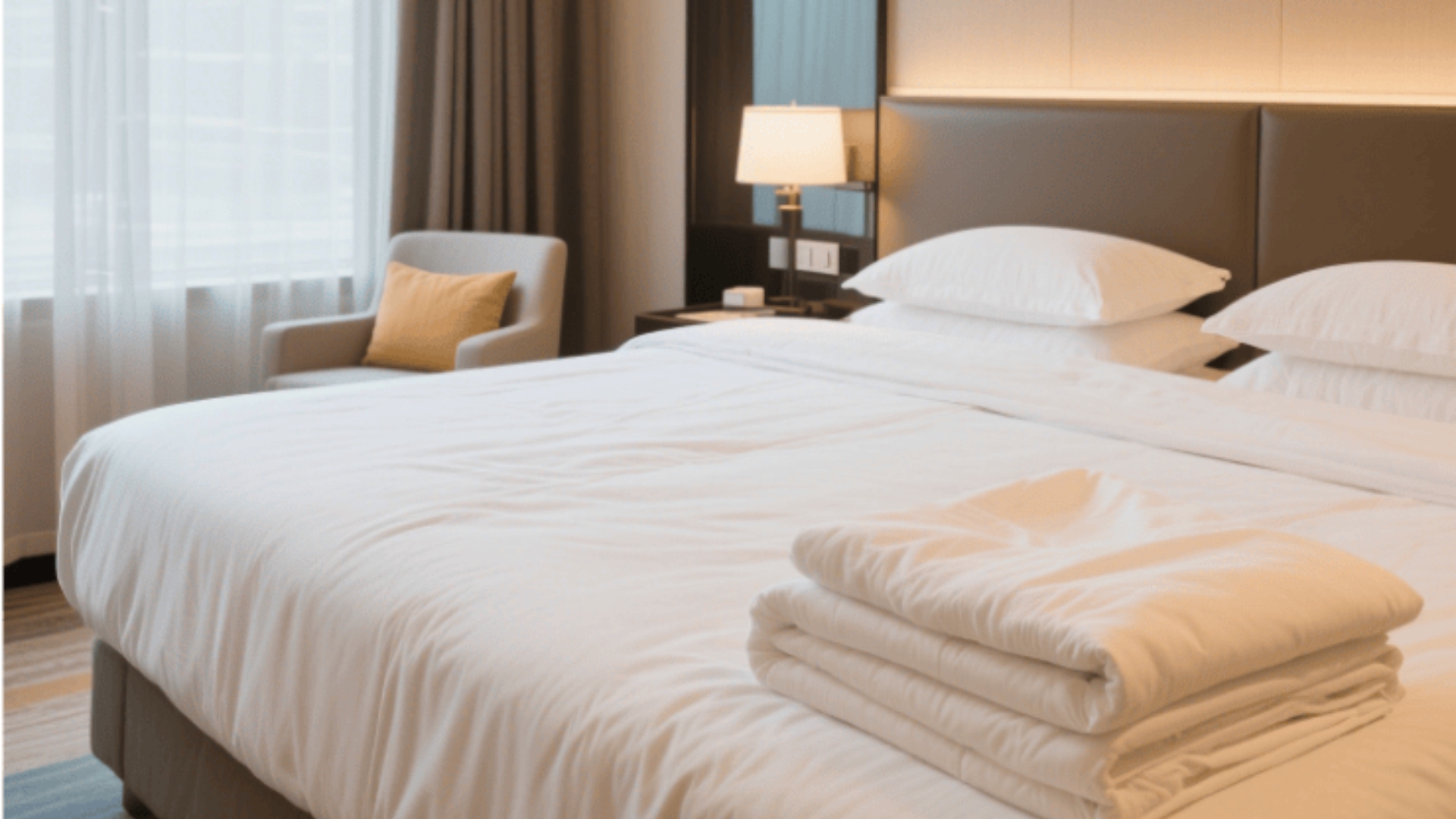
The spare linen on each floor should be categorised by type and specification and neatly placed on linen racks, like bed sheets on one shelf, pillowcases on another. It must not be stacked on the floor or in the corners of service carts.
Spare Linen Quantity List should be posted next to the linen rack, like 20 sets of bed sheets, 40 pillowcases for 10 guest rooms, so that staff can count the linen independently at the start of each shift to ensure clear quantities and no shortages.
Record Linen Loss
● Daily
Record the reasons for linen loss every day and specify the exact number:
1 pillowcase; discarded (damaged), lost, taken by guests…
● Monthly
Count according to the hotel’s established standard loss quota:
If losses exceed the quota, staff should analyse the root causes, like human waste or improper washing and take corrective actions.
Linen Usage Standards
Guest linen (bed sheets, duvet covers, towels…) can only be used by guests and must not be used for other purposes, like wiping tables or floors with guest towels. If staff cause man-made damage to linen (spilling coffee on a bed sheet), they should compensate according to hotel regulations.
If guests damage linen that cannot be washed, guests should pay the compensation fees according to the hotel’s standards. The compensation standards must be clearly stated in the pre-arrival notice.
Store Special Linen
Thick quilts and lightweight quilts should be stored separately by season in designated locations, like warehouse shelves or under guest room beds. All quilts must be thoroughly washed and air-dried before storage to prevent mould growth. Then, they should be sealed in dedicated dust-proof bags with the bag openings tightly closed to avoid dust accumulation.
Buy Linen
When the ratio of guest room beds to available linen drops to 1:2.7, hotels should buy the linen in time: 10 rooms need 27 sets of usable linen. If the ratio is lower than this, the linen turnover will be badly affected.
The purchasing number should be calculated as 0.5 times the number of guest room beds to avoid inventory shortages or overstocking: 5 sets for 100 rooms.
Post time: Dec-31-2025