
During linen processing, there are two common bleaching agents and disinfectants (chlorine bleaching powder and liquid chlorine bleach). They can remove pigments from white fabrics. Also, they can eliminate microorganisms such as bacteria, viruses, and fungi. They are widely used in the industry. However, in practice, improper handling or contact with contaminants may cause overall or localized linen discoloration. This article will introduce some common cases. Kingstar hopes this provides guidance for front-line workers in laundry plants.
Linen Yellowing
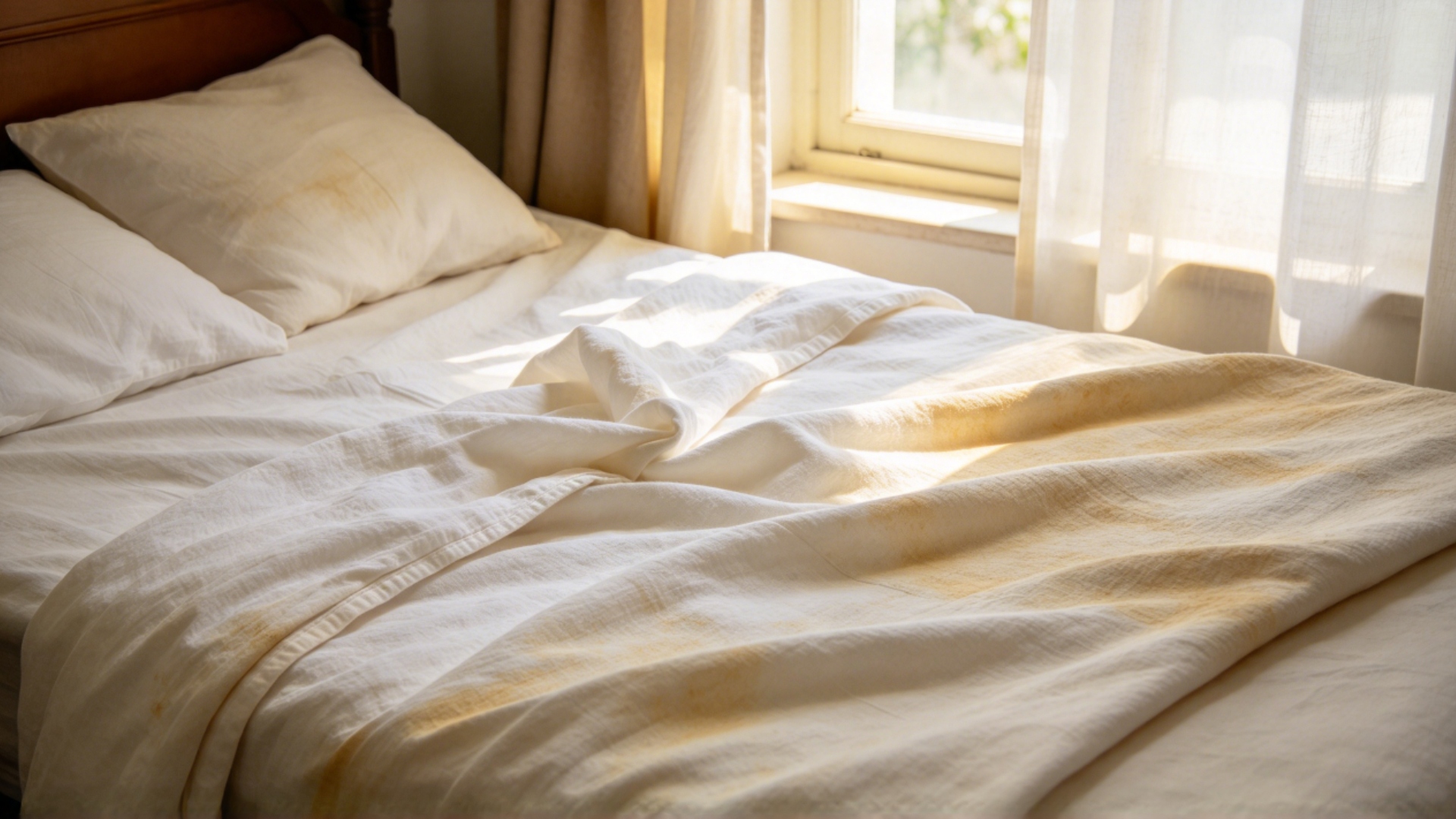
After chlorine bleaching, linen yellowing is common in commercial laundry operations. There are three main reasons.
First, chlorine bleaching is heavily oxidizing. It may cause over-oxidation. This can result in linen aging and yellowing. The key to stain removal is proper process control. Choose appropriate dosage, concentration, contact time, and temperature. Parameters should be controlled within the recommended ranges. This prevents excessive oxidation.
Second, chlorine bleach contains a large number of alkaline impurities or substances used as stabilizers. If chlorine bleach is added under acidic conditions, this can lead to a strong acid-base neutralization reaction and release large amounts of energy. This can damage fiber structure and fabrics. If they are added at low temperatures, they may not dissolve easily. This can easily cause fabric wear. If they are added in too large a dose, excessive alkaline substances and free chlorine remain on fabrics. This directly causes fabric yellowing.
Third, during regular laundry processes, many laundry plants use alkaline detergents. If alkaline-based chlorine bleach is added, the concentration of alkaline substances will increase. Thus, after using chlorine bleaching, increase the number of rinse cycles and add more neutralizing acids as needed. So, alkaline substances can be completely consumed during rinsing and neutralization. The above issues can be prevented.
Localized Pink Stains
These stains often occur in hotel linen and white shirts, especially the collar areas on women’s garments. This is more common in summer and tourist cities. In summer, sunscreen products come into contact with fabrics. Without complete pre-washing, most stains still remain on fabrics. They may be oxidized and turn pink due to oxidation after chlorine bleaching.
If these stains have occurred, use reducing agents to remove the discoloration. For mild stains, the color can fade after being dried outdoors. But faint discoloration marks may remain. For discolored linen, enhance the pre-washing process to remove most stains. Chlorine bleach dosing should be delayed. Also, reduce the use of chlorine bleach. Give preference to high-performance emulsifiers or oxygen bleach. This can prevent linen discoloration.
Localized Dark Brown Stains
These stains mainly appear on healthcare textiles. They are invisible to the naked eye before washing. But drip-like or splash-like, yellowish-brown stains may occur after washing. Conventional washing is often ineffective. This can cause stubborn stains. These stains are related to alcohol-based hand sanitizers used in healthcare systems. The alcohol-based hand sanitizer on the market mainly contains chlorhexidine gluconate. This substance reacts with bleaching agents like chlorine bleach. This produces dark brown stains. They adhere to fabrics, which makes them difficult to remove. Alcohol-based hand sanitizers are colorless, odorless, and easy to use. They easily come into contact with other parts of fabrics after use. Thus, these stains appear on healthcare linen and garments.
The recommended treatment is similar to the previous item. Give preference to improving pre-washing efficiency. Thoroughly remove most stains. Delay chlorine bleach dosing. Also, reduce the use of chlorine bleaching. Give preference to a high-performance emulsifier or oxygen bleach. This can prevent linen discoloration.
Conclusion
The above stains (linen yellowing, pink stains, and dark brown stains) caused by chlorine bleaching result from specific contaminants during laundry processes or linen loads. Most of them can be prevented. The above three stains share common preventive measures. Precisely control the concentration, contact time, temperature, and dosing time of chlorine bleaching. Residual stains can be removed through pre-wash before oxidation. Also, thorough rinsing and neutralization can remove residual alkaline substances. These are the basic processes.
For high-throughput laundry operators, these processes are more likely to be implemented at the system level. Kingstar is a smart laundry plant system integrator. It offers complete laundry equipment (tunnel washer systems, spreading feeders, ironers, folders, garment finishing lines, and laundry plant logistics systems). With refined process management, laundry plants can achieve consistent, repeatable laundry results. Also, they can follow standardized chemical use and proper processes. They can incorporate these requirements into standard operating procedures.
Q&A
Q1: Why does linen turn yellow after chlorine bleaching?
A1: Excessive fiber oxidation can cause linen yellowing. Also, chlorine bleach is added under acidic conditions or at low temperatures. It may also be added in too large a dose. Because of insufficient rinsing or neutralization, residual alkaline substances and free chlorine may remain on the linen. But this can be prevented by adjusting parameters (dosage, time, temperature, and rinsing cycles).
Q2: Why do pink stains often appear on collars and in summer?
A2: These stains are caused by sunscreen products used by women in summer. If stains are not removed during pre-washing, they can be oxidized to pink. The recommended solution is to improve pre-washing efficiency. Chlorine bleach dosing should be delayed.
Q3: Can pink stains be removed?
A3: Most of them can be removed with reducing agents. Mild discoloration can fade after being dried outdoors. But this may leave faint discoloration marks.
Post time: Nov-27-2026