
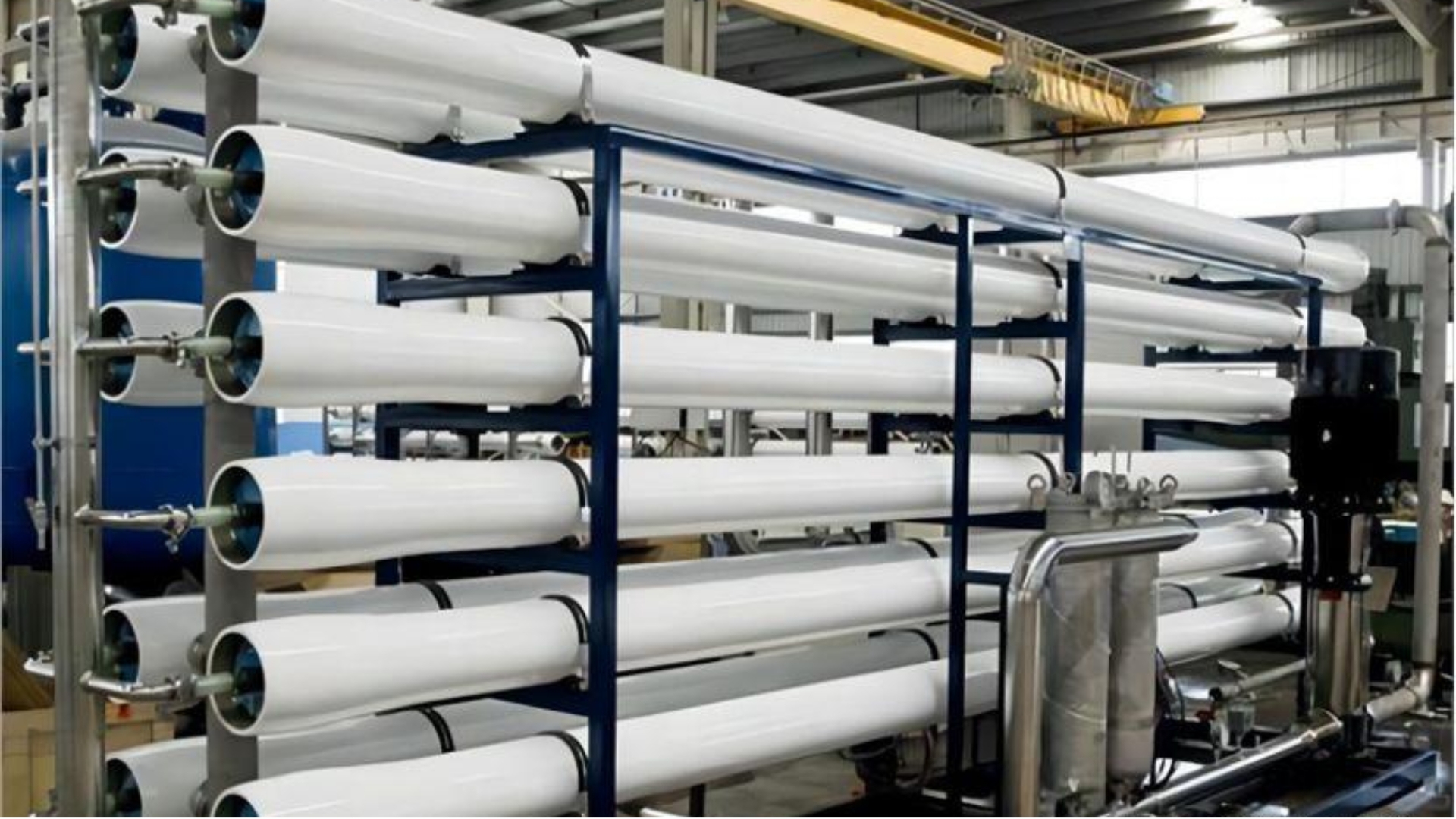
Linen laundry plants often use tap water as raw water. After pre-treatment and reverse osmosis (RO), permeate is used for the main wash, rinsing, and other laundry processes. Tap water seems to be clean. But its indicators (hardness, residual chlorine, TDS, and turbidity) fluctuate according to seasons and pipelines. This directly affects detergent dosage, linen whiteness and hand feel, scale buildup on equipment, and the RO membrane’s service life.
Design determines the potential of RO systems. Operations and maintenance determine whether they can reach this potential. Daily management, which is systematic, standardized, and consistent, can reduce equipment failure. This can extend equipment lifespan. Also, it can optimize operating costs. Besides, good water quality delivers ideal linen results. It can reduce scale buildup on laundry equipment (tunnel washers, industrial washers, and ironers). This improves washing and ironing quality. It extends equipment service life. Also, it reduces maintenance costs.
Softened water costs depend on two key factors. The first is chemical dosage, electricity consumption, and membrane wear. The second is water consumption per kilogram of linen. Water consumption directly affects how much water RO systems should produce, chemical dosage, and how frequently the membrane elements should be replaced. The Kingstar tunnel washer uses a water reuse design. It consumes around 5.5 kg of softened water per kilogram of linen. After recycling, softened water can be used in pre-wash and main wash. Under the same water quality standards, chemicals used for softened water production, energy consumption, and membrane wear can be reduced, with lower water consumption. Meanwhile, wastewater discharge and treatment load are reduced accordingly.
The following stages solve water quality issues. Water-saving equipment helps reduce water consumption. Only by addressing the two aspects can operating costs be optimized.
Chemical Dosage
During RO treatment of tap water, the membrane may be damaged by inorganic scaling (calcium carbonate and calcium sulfate). Residual chlorine may cause oxidative damage to the polyamide membrane. Thus, focus on the following points during chemical dosing.
– Antiscalant dosage
Antiscalant dosage is typically 2-5mg/L. This depends on many parameters (tap water hardness, alkalinity, pH, temperature, and system recovery rate). Add more antiscalant appropriately or use water softening to reduce water hardness. Also, this can prevent membrane scaling.
– Reducing agent
Sodium bisulfite can be used to remove residual chlorine in the tap water. The recommended dosage is 3-5 times the residual chlorine amount. The residual chlorine at the RO inlet should be under 0.1mg/L. Excessive residual chlorine causes irreversible oxidation of the polyamide membrane. A decline in salt rejection also causes irreversible oxidation.
– Biocide
A non-oxidizing biocide can be used for microbial control. Regular shock dosing prevents oxidizing biocide from entering the system. In practice, antiscalant dosage, reducing agent, and biocide should be separately injected, rather than mixed. Inspect water hardness and residual chlorine weekly and record chemical dosage. Build relationships between water quality and chemical dosages.
Data Monitoring
Many laundry plants overlook equipment maintenance. But RO membranes can deteriorate gradually. During daily operations, record feed pressure, interstage pressure differential, permeate flow rate, permeate conductivity, salt rejection rate, silt density index (SDI), residual chlorine, and water hardness.
If the normalized permeate flow drops by 10%-15% (the pressure differential increases by 10%-15%, or the salt rejection rate decreases by 5%), perform cleaning or troubleshooting. SDI should be controlled below 3. Turbidity should be within 1 NTU. Record these parameters daily and draw the trend curve. If the pressure differential rises for three consecutive days, inspect pre-treatment for effectiveness and chemical dosage, even though it doesn’t reach the threshold. Data helps detect abnormalities in advance. This is more cost-effective than waiting for equipment alarms and repairs.
Smart Management
Laundry plants consume large amounts of water and operate continuously. Manual inspection is difficult to maintain all the time. However, a smart monitoring system can track key parameters (TDS levels, flow, pressure, and residual chlorine) in real time. Operators can monitor them via phones or computers. The system automatically sends abnormal alerts.
Laundry plants with limited budgets should use online conductivity monitors and pressure sensors. Connect key data to the remote monitoring module. A comprehensive system can set consumables replacement reminders. If filters and activated carbon beyond their lifespans are used, this can cause membrane fouling. Also, if abnormalities are not detected, membrane elements need to be replaced. The losses are greater than the investment in monitoring equipment.
Water Quality Inspection
The quality of tap water can change. Regular inspection is the foundation for evaluating feed water risks and developing maintenance strategies. Key indicators mainly include total hardness, pH, residual chlorine, EC/TDS, turbidity, iron, and manganese.
Laundry plants can use a portable water hardness test kit and a residual chlorine colorimeter. Inspect feed water hardness and residual chlorine weekly. Commission a third party to analyze all metrics quarterly. Identify the seasonal fluctuations of water quality. Also, check the pre-treatment and chemical dosage systems if there are abnormalities. Try to fix them before the RO system breaks down.
Membrane Cleaning
An RO system using tap water as its feed water may be polluted by calcium carbonate scaling, calcium sulfate scaling, colloids, and microorganisms. Acidic cleaning agents (citric acid) can be used to remove inorganic scaling. Alkaline cleaners with surfactants are suitable for organic and microbial fouling. Cleaning should strictly follow the standardized parameters. Avoid cleaning based on experience. Excessive cleaning can also damage membrane elements.
During cleaning, pay attention to pH, temperature, and circulation time. Follow the membrane manufacturers’ requirements. Establish a membrane cleaning log. Record permeate flow, pressure differential, and salt rejection rate. After collecting data 2-3 times, laundry plants can identify the fouling patterns of the membrane system and optimal cleaning intervals.
Pre-treatment and Maintenance
Pre-treatment is the first line of defense for an RO system. The quartz sand filter should be backwashed every 12-24 hours based on feed water turbidity. Backwash lasts 15-20 minutes. The activated carbon filter should be backwashed every 24-48 hours. Replace filter media every 3-6 months. Thus, residual chlorine can be kept below 0.1mg/L. Also, regularly inspect the water softener’s salt level and regeneration cycle. Monitor outlet water hardness. If the cartridge filter’s pressure differential exceeds 0.1MPa, replace it promptly. The regular replacement interval is 1-3 months.
Before starting operations, laundry plants can inspect and record differential pressures across filters. Develop a fixed process: “inspect before startup, record after shutdown”. A schedule should be built for filter media and cartridges. Prepare supplies in advance to prevent unplanned shutdown.
Conclusion
Maintenance for RO systems is not a secondary task. It is a systematic operation that requires standardization, data support, and regular implementation. For linen laundry plants, laundry operations consume large amounts of water. Kingstar tunnel washer features a water recycling design. Water is reused for pre-wash, main wash, and other stages. This can reduce the costs of softened water and membrane wear.
Also, standardized maintenance can improve water quality consistency. For example, key factors (feed water hardness, residual chlorine, and TDS) should be controlled. Thus, the risk of scale buildup on equipment (Kingstar tunnel washers, ironing lines, and industrial washers) can be reduced. This can ensure heat transfer efficiency, extraction performance, and ironing quality. Also, equipment lifespan can be extended. Maintenance costs can be reduced.
Equipment helps save water while the RO system maintains water quality. Incorporate the above six practices into daily management. Thus, laundry plants can develop a traceable system that supports routine reviews. RO systems can be a reliable foundation for reducing costs and improving efficiency.
Q&A
Q1: Which is more expensive, an RO system or a resin-based water softener?
A1: RO systems require relatively high costs. But they can provide better water quality. For high-end hotel linen laundry, an RO system helps maintain linen whiteness and softness.
Q2: Can scale buildup appear on laundry equipment after using an RO system?
A2: It can reduce scale buildup. But it cannot prevent it. During linen washing, chemical residues and shed fibers can accumulate on laundry equipment. In addition, after long-term use, filter capabilities may decline. Thus, regular monitoring and daily maintenance can reduce scale buildup.
Q3: What is the processing capacity of a Kingstar tunnel washer?
A3: A 60 kg tunnel washer can handle 40-60 kg of linen per batch. It can process up to 1.8 tons of linen per hour.
Post time: Nov-26-2026