
In the establishment process of intelligent laundry plants, though laundry plant investors have a forward-looking vision. A powerful executor capable of turning blueprints into reality is equally indispensable. However, the current laundry equipment manufacturing industry is currently in a double dilemma of ability structure and market environment. This dilemma delays the upgrade of individual enterprises and locks the entire industry’s path to intelligent transformation from the supply side. This article will deeply analyze how the capability shortcomings of equipment manufacturers and the vicious competition in the market constitute the “second gate” of intelligence together.
Planning and Integration
A common misunderstanding is that laundry equipment manufacturers that manufacture high-performance individual devices naturally have the ability to build intelligent factories. The truth is quite the opposite. The true intelligent laundry industry’s core competitiveness has transformed from the extremely good performance of individual machines to the intelligence of an integrated system. Just as we pointed out before, the accumulation of hardware equipment (tunnel washer, ironing lines) only constitutes 60% of the success factors. The rest 40%, including overall process planning, logistics design, software control, and systematic integration, is the key to determining the success or failure of the programs.
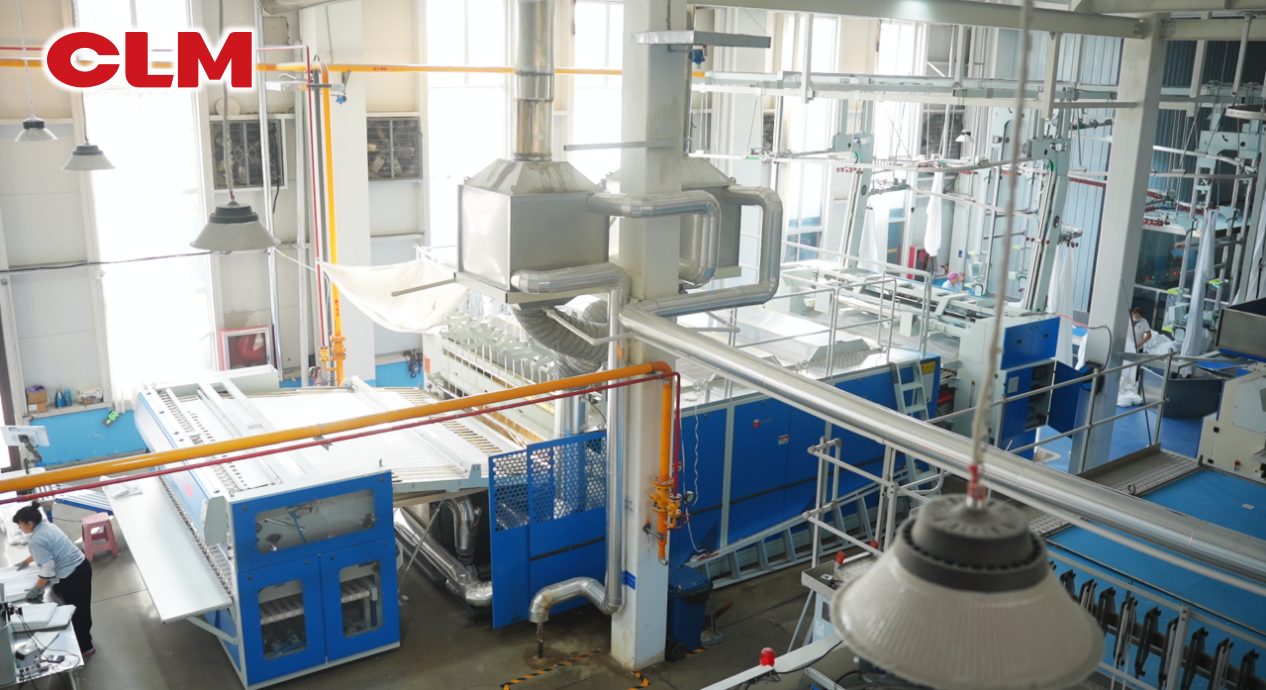
However, the core abilities of many laundry equipment manufacturers have serious misalignment. They focus on manufacturing design, material process, and batch production, and continuously pursue or even surpass famous international brands in terms of the performance of individual machines. But they seriously lack the professional talents in industrial engineering, logistics simulation, automatic control, and software system development. As a result, they are good at building many strong “hearts”, tunnel washers, or “arms”, ironing lines, but they cannot build a highly coordinated “nervous system” and “circulatory system” for the entire factory. The advanced equipment, which costs a lot, has become isolated automation islands. They still rely on a large number of manual workers and trolleys for connection and material turnover. Intelligence is out of the question.
Neglected Auxiliary Equipment Ecosystem
The smooth operation of the intelligent assembly line cannot do without a series of precisely matched auxiliary equipment: automatic weighing and sorting machines, intelligent hanging bag and buffer systems, multi-directional connection conveyor lines, AGV/AMR mobile robots, automatic packaging and palletizing equipment, and ubiquitous data collection terminals. These devices are the “joints, blood vessels, and nerve endings” that connect the host.
However, the truth is that mainstream manufacturers’ interests and resources almost all focus on the research, development, and war price of tunnel washers, ironing lines, and dryers. Their investment in auxiliary equipment with a wide variety of types, high customization requirements, and relatively small market capacity for individual products is seriously insufficient. This is not a simple neglect. It is the abnormal feedback from the market. When the whole system lacks these key components, the intelligent chain is forced to break at each node and revert to the original manual operation. The huge investment in the main equipment in the early stage greatly reduced the benefits.
Low-Price Rat Race
Why don’t the equipment manufacturers want to invest in these important auxiliary equipment and integrated solutions? The core reason is the low-price rat race of the laundry equipment market.
In project bidding, the bargaining focus of customers (even many who claim to want intelligence) often still remains on the unit prices of main units such as tunnel washers and ironing lines. To win the orders, manufacturers are forced to get embroiled in an unscrupulous price war. Vicious competition gives birth to a distorted business model. Planning fees, software fees, and key auxiliary equipment that should show professional value are bundled and sold as free gifts or promotional chips for the mainframe.
Terrible Results
This causes a terribly bad result. Fine Auxiliary equipment and software systems with advanced development have lost their independent pricing power and market value. They cannot be sold at a high price and are even provided for free. Few companies are willing to keep investing in research and development. The industry finally falls into a vicious cycle: lower prices → cost cuts (especially R&D and innovation) → similar products and services → further price cuts.
This rat race is like an invisible noose. It destroys companies’ financial strength and willingness to innovate, preventing them from upgrading and shifting to systematic solutions. As a result, the whole industry is stuck in low-level, repetitive hardware assembly.
Q&A
Q1: Why is weak system integration a big problem for equipment makers going smart? How is it different from traditional turnkey projects?
A1: Traditional turnkey projects involve installing machines separately to make them work. Smart system integration is different. It means redesigning workflows and connecting data.
Some manufacturers lack this capability because this capability needs an interdisciplinary team (industrial engineers, software architects, and automation experts) to do top-level design and in-depth intervention in the entire operational process of the client. This is far more complex than installing the equipment according to the standard drawings. Without this, what they provide is just a bunch of “building blocks” that customers need to painstakingly assemble themselves, rather than a plug-and-play, self-optimizing “organic life form”.
Q2: Why is the research and development of auxiliary equipment (such as smart hanging bags, AGVs, etc.) not attractive to manufacturers?
A2:
● The market for auxiliary equipment (like special sling bags) is small, but R&D costs are high. Returns are low.
● These products are not valued properly and are often given away for free, so there is no profit to support further development. This breaks full automation.
- Without smart sling bags and buffer systems, workers must handle linen manually.
- Without AGVs and smart conveyors, finished linen has to be moved to the warehouse by hand.
- Factories have automated main processes, but connections still rely on labor. Overall efficiency is limited by slow manual work, and most of the benefits of smart factories are lost.
Q3: How do market rat race and low-price competition stop equipment makers from becoming smart solution providers?
A3:
● Low profits leave no funds for skilled engineers or long-term R&D.
● Managers only care about cutting costs to survive.
● Low pay makes it hard to hire and keep good staff.
● If an innovation doesn’t save money right now, some people may think it’s useless. In the end, companies can’t invest in the future. They just stay in low-value manufacturing forever.
Post time: Feb-11-2026