
Some laundry plants may encounter such issues. The washer’s pneumatic door responds poorly. The ironer’s cylinder operates slowly. The folder’s solenoid valve frequently sticks. Replacing them with new spare parts can address the issue temporarily. But after some time, similar situations recur. This may be related to excessive moisture in compressed air.
Laundry plants are in a high-temperature and high-humidity environment. The air intake of the air compressor carries large amounts of moisture. After compression, moisture saturation sharply increases. If the refrigerated air dryer or air filter works improperly, liquid water will enter the pneumatic components of each machine along the air lines. The mixture of water, oil stains, and impurities may cause a series of failures: cylinder bore corrosion, seal swelling and deformation, solenoid valve spool sticking, and pneumatic valve spring corrosion. Due to oil-water mixtures, new components are damaged again after short-term operation.
Laundry plants may not be shut down promptly due to this failure. But it continues to affect the stability of the entire production line. In the long run, production efficiency and washing quality decrease while maintenance costs increase.
Components of Compressed Air System
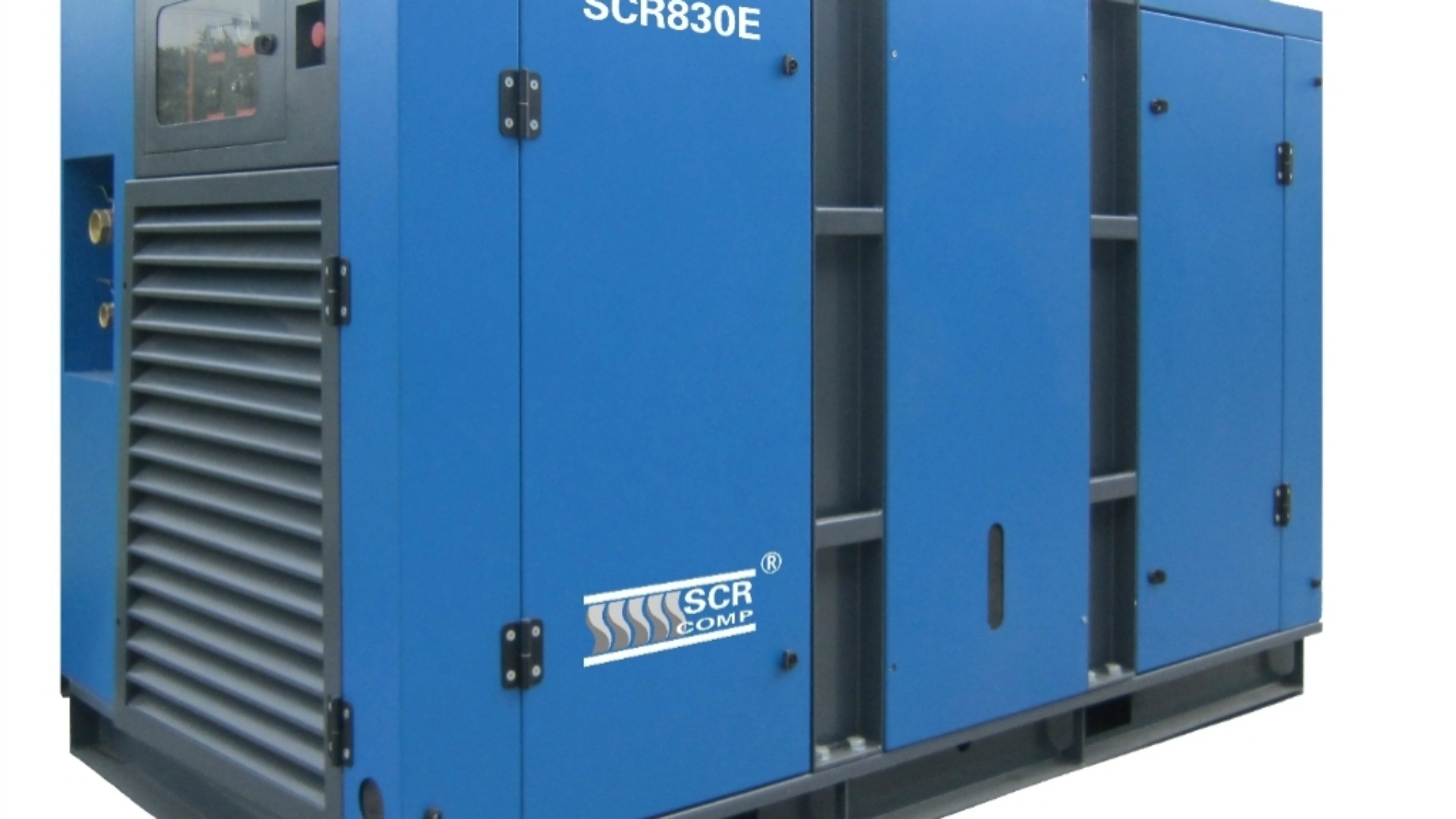
A complete compressed air system usually consists of five core components.
– Air compressor unit
It is responsible for generating compressed air, which is the heart of the entire system.
– Air receiver
Store compressed air. Stabilize pressure. Initially precipitate condensate water.
– Refrigerated air dryer
Condense water by cooling. It is effective in removing moisture.
– Pre-filter & post-filter
Remove oil mist, dust, and liquid water. This can ensure air quality.
– Piping & valve
Transport compressed air to all air-using points.
In laundry plants, machines (such as washers, dryers, ironers, folders, and packers) cannot operate without compressed air. Besides pressure, air quality and temperature are also important. Compressed air with excessive oil and moisture not only damages equipment but also affects linen washing quality. For example, oil stains cause secondary contamination to equipment through air lines.
Daily Inspection
Daily maintenance is the first line of defense for compressed air system maintenance. Spend 10 minutes checking before starting the machine or during the shift handover.
● Check for Abnormal Noises
Walk around the machine to check. A normal screw air compressor often generates low-frequency buzzing. If hearing high-pitched whistling, metal friction, or irregular clicking noises, stop the machine promptly.
Meanwhile, use soapy water to check for air leakage in pipeline joints, valves, and flanges. At a pressure of 0.7 MPa, a pinhole-sized leakage may lose several cubic meters of air. Besides electricity waste, it causes insufficient downstream air pressure.
● Check for Instrument Readings
The instrument panel acts as the health indicator of the compressed air system.
– Discharge pressure
The rated range is between 0.6 and 0.8 MPa. If the pressure remains low, check for leakage or air intake.
– Discharge temperature
The normal temperature is between 75℃ and 95℃. Overheating means there is something wrong with the cooling system. Long-term high temperature accelerates lubricant degradation.
– Dew point temperature of the refrigerated air dryer
This is a key point for moisture removal performance. The lower the dew point temperature, the drier the air. Check the refrigerated air dryer promptly for abnormal temperatures.
● Filter Drainage & Differential Pressure Monitoring
The automatic drain valve under the pre-filter is easily overlooked. Check it every day for proper operation. If it is clogged, the filtered water cannot be discharged, which is carried back by the airflow. This makes filters ineffective. Meanwhile, pay attention to the differential pressure gauge or indicator on the filter. When the differential pressure exceeds 0.5 bar, the filters should be replaced.
● Air Receiver Draining
Large amounts of condensate water and oil stains may accumulate at the bottom of the air receiver. At the end of each workday, open the bottom drain valve to completely drain water. In humid areas, drain the water twice a day.
Kingstar suggests installing an automatic condensate drain. Set the time interval for automatic drainage.
● Clean Dust Filter Screens
Dust is more likely to accumulate on the cooler fins of the air compressor. In laundry plants, lint and dust accelerate blockage. Clean the dust filter screens and cooler fins at least once a month. Blow dust from the inside out with compressed air. Pay attention not to blow dust into the internal machine. Flush the heavily oiled areas with specialized detergents. If the cooling performance improves, the operating temperature of the air compressor can be reduced by 5-10℃. The lubricant service life can also be extended.
Before any cleaning and maintenance, disconnect power and release pressure first. Operate after the machines have completely cooled down. In a high-temperature state, coolers and oil piping can easily cause burns.
Regular Maintenance
Air compressor maintenance should not rely on experience. Meanwhile, it cannot be maintained every half year or once a year. Machines operating 8 hours or 24 hours significantly vary in their energy consumption. The correct method is to make a maintenance plan based on their operating hours.
● First Maintenance
After operating 500 hours, perform the first maintenance for new or repaired air compressors. This is a key step after the break-in period.
– Replace lubricants. During the break-in period, there is a lot of metal debris. Old oil must be completely discharged.
– Replace the oil filter element.
– Check and clean air filter elements.
– Check belt tension (belt-driven machines).
– Tighten all pipeline joints and bolts.
On the touchscreens of many screw air compressors, there are maintenance reminders and alarm notifications. They are only based on the critical values from large amounts of data.
● Regular Maintenance Period
|
Maintenance Items |
Period (operating hour) | Notes |
| Lubricant replacement | 2,000-3,000 hours | Choose dedicated screw compressor oil. |
| Oil filter replacement | 2,000-3,000 hours | Replace filters and lubricants at the same time. |
| Air filter element | 2,000 hours/half a year | In a workshop with poor conditions, replace it after 1,000 hours of use. Blow off the dust and reuse it. |
| Oil-water separator filter/precision filter element | 2,000-3,000 hours | Replace it after 300-500 hours of first use. Then follow the regular maintenance period. |
| Belt check and adjustment | 2,000 hours | Over-loose belts cause slipping while over-tight ones damage bearings. Adjust it according to the manual. |
| Rotor lubricant and three filters | 4,000 hours | It is suggested to replace them by a professional service provider. |
| Intake valve/pressure valve/temperature control valve/check valve | 8,000 hours | Clean or replace sealing components properly. |
| Motor maintenance | 12,000 hours | Bearing lubrication, insulation testing, and fin cleaning |
| Compressor unit and Gearbox inspection | 20,000 hours |
Professional rotor clearance and gear wear inspection |
● Refrigerated Air Dryer & Filter Maintenance
Regularly clean condenser fins. It is similar to air compressor coolers.
Refill refrigerant in time if the pressure is not enough.
Regularly clean automatic drain traps to avoid scale and oil stain blockage.
Descale the evaporator every half a year to ensure heat transfer efficiency.
● Reduce Maintenance Period for Other Special Conditions
Some laundry plants with poor conditions should adjust maintenance plans. For the following situations, the maintenance period should be reduced by 30%-50%.
– Workshops with poor ventilation and heat dissipation
In a small and hot room, the environmental temperature always exceeds 35℃. This accelerates the aging of air compressor lubricants.
– High-humidity, high acidity/alkalinity environment
The laundry plant itself is humid, which causes severe corrosion to internal compressed air systems.
– Environment with much dust and lint
Lint and dust in linen laundry workshops easily trigger air filter and cooler clogging.
– Intake air containing cooking oil fumes and chemical gases
If boilers, kitchens, or chemical storage areas are near air compressors, the intake air quality will become poor. This obviously accelerates oil deterioration.
Simply put, the replaced air filter is dirty. The color of discharged oil is dark. The water drained from the air receiver is muddy. That means the current operating condition is severe. It is time to shorten the maintenance intervals.
Conclusion
Besides main equipment maintenance (washer and ironer), laundry plants should focus on auxiliary equipment, such as compressed air systems. Daily maintenance can help equipment stay in good condition.
The yearly maintenance cost of a compressed air system is lower than that of cylinder and solenoid valve replacement. Proper compressed air system maintenance helps extend pneumatic component service life. Equipment failure rates noticeably reduce while production plans are more controllable.
Laundry plants can also build a maintenance log. Record each maintenance time, operating hours, and replaced components.
Q&A
Q1: Can Kingstar towel folder handle garments?
A1: Yes. It can fold sauna clothing and T-shirts.
Q2: What is the maximum size of towel that a Kingstar towel folder can handle?
A2: The standard folding length is 1.9 m. The extended edition is 2.4 m.
Q3: How many folding methods does a Kingstar towel folder have?
A3: 11. It can meet the folding requirements of various hotels.
Post time: Aug-21-2026