
After the Clean Show 2025 in Orlando, USA, the senior leaders of the CLM Group visited some laundry factories with a high degree of automation in the United States. That visit had a great impact on them.
Frankly speaking, their equipment parameters, in terms of the performance of individual machines, are not as good as those in China. Even some of the functional configurations are not as detailed as CLM’s. What truly impressed people was not the efficiency of a single piece of equipment, but the overall planning and design capabilities of the laundry factory.
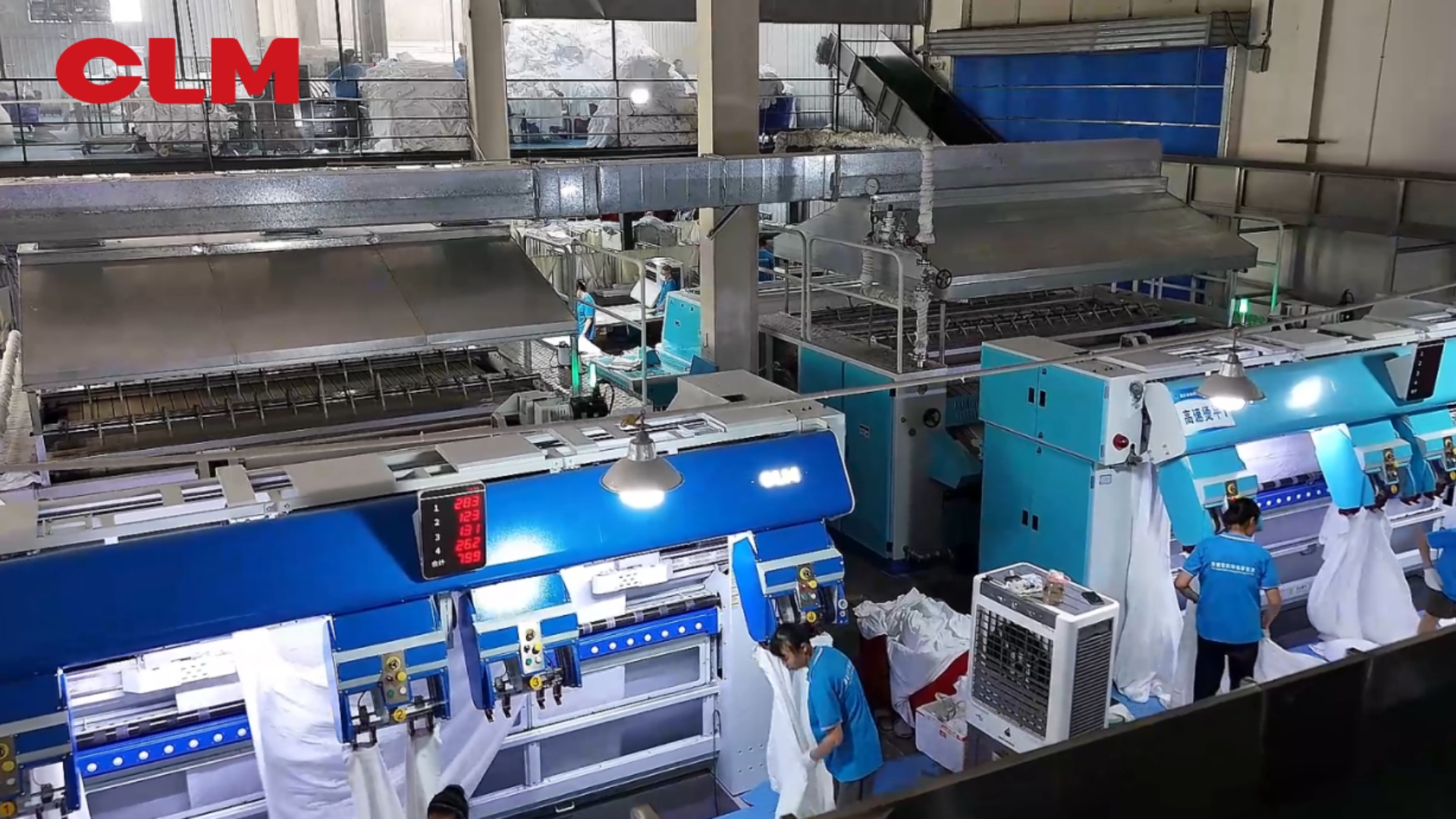
Throughout the enire workshop, there is hardly any scene of people pushing linen carts back and forth. There are no haphazardly piled linen piles, and no people frequently shuttling between different workstations. The task of every position is extremely clear, and every action is highly standardized. The circulation of linen in the factory relies more on intelligent logistics conveying systems rather than manual handling. Each process is naturally connected rather than relying on human efforts to fill in the gaps.
At that time, the senior leaders of the CLM Group realized that the gap between China’s laundry industry and advanced foreign factories does not mainly lie in the capacity of individual equipment, but in the systematic overall planning of the entire factory. China’s laundry industry has manufacturing capabilities: mature tunnel washers and ironing equipment. However, the ability to make overall plans, to design at the top level, and to integrate all the equipment into a flexible whole is insufficient.
Development Path of Chinese Laundry Factories and the Characteristics of Each Stage
After going back to China, we, CLM, keep thinking about a question. The Chinese laundry industry has been calling for the creation of “digital and intelligent laundry factories”. Why is it still so difficult to see truly highly automated laundry factories?
If we cannot figure out this problem, we won’t be able to truly promote the upgrading of the industry. As a result, we re-examined the development path of China’s laundry industry and analyzed the current stage and future direction we are in.
We think the development path of Chinese laundry factories should be: the standalone machine era → the 1.0 era of intelligent laundry factories → the 2.0 era of intelligent laundry factories → the 3.0 era of intelligent laundry factories → the 4.0 era of intelligent laundry factories.
At present, it can be said that we are entering the 3.0 era of Smart Laundry Factories.
Let’s see the development path of China’s laundry factories and the characteristics of each stage.
● The standalone machine era: the initial stage of equipment replacing some manual labor (around 2008)
The large-scale development of laundry factories in China began around 2008. Before this, a large number of laundry factories were still in a relatively primitive production mode:
- Use horizontal washers for washing
- Use centrifugal dehydrators for dehydration
- Use basic roller ironers for ironing
- Feeding at the front and folding at the back is manual.
In 2008, the price of 100kg washers dropped sharply, and many laundry plants upgraded their 100 kg washers to replace the combination of horizontal washers and centrifugal dehydrators. Also, in the post-wash finishing process, normal folders gradually replace manual folding. From then on, China’s laundry industry entered the “Standalone Machine Era”.
This stage simply improved the productivity of single machines. The whole process still relies on manual labor.
● The 1.0 era of intelligent laundry factories: popularization of automated equipment (from around 2012 to 2024)
Around 2012, domestic tunnel washers and high-speed ironing lines were successively developed and put on the market. In the next decade, the automatic equipment kept upgrading, and the technology gradually became mature. More and more laundry factories began to use tunnel washers + high-speed ironing lines + simple conveying equipment. Compared with standalone machine mode, this production method has great improvements in processing capacity, production efficiency, and output per unit of labor. This period is what we call the “era of automated equipment”.
● The 2.0 era of intelligent laundry factories: the internal logistics system of the laundry factory
After the core production equipment was automated, the laundry factory began to focus on the in-plant logistics system.
Hanging bag storage system, intelligent conveying line, automatic sorting and picking system, and other logistics auxiliary equipment are gradually introduced into the production process.
Therefore, the production organization mode of the workshop changed. All personnel can work at designated points and positions.
There is no bustling scene of people walking around and linen carts being pushed back and forth in the workshop.
● The 3.0 era of intelligent laundry factories: digital management
After the gradual improvement of automated equipment and logistics systems, laundry factories began to further promote digital management.
By integrating Internet of Things (IoT) technology, intelligent equipment, ERP management systems, and digital management platforms, laundry factories can do more systematic and data-driven management of the production process.
- real-time monitoring of the whole laundry process
- online monitoring of equipment status
- dynamic and optimization of energy consumption data
- intelligent adjustment of production rhythm
- fault early warning and preventive maintenance
At this stage, data gradually becomes an important management tool for the operation of laundry plants. The enterprise management model has also begun to gradually shift from being experience-driven to data-driven.
● The 4.0 era of intelligent laundry factories: unmanned operation
With the continuous development of robot technology, machine vision, AI algorithms, and automatic equipment, the laundry plants are heading towards unmanned operation.
More and more positions began to be replaced by the automatic system:
- Unmanned sorting system
- Auto hanging & spreading
- Auto packing & storage
- Unmanned delivery
So, to what extent can the degree of unmanned operation reach? Let’s take an example. If a laundry plant with a daily processing capacity of 30 to 50 tons has high automation and intelligent operations, the entire workshop may only require 2 to 3 management, operation, and maintenance personnel to complete daily production management.
After combing the development path of the laundry plants, we can clearly see such a trend:
Standalone equipment → automatic production → intelligent logistics → digital management → unmanned operations
Conclusion
This is not only the upgrade of equipment. It is a transformation in production organization methods, a reconstruction of the logistics system, the establishment of a data-driven model, and an upgrade in operational thinking. It represents a series of revolutions in the laundry industry!
After the Clean Show 2025 in Orlando, USA, the senior leaders of the CLM Group visited some laundry factories with a high degree of automation in the United States. That visit had a great impact on them.
Frankly speaking, their equipment parameters, in terms of the performance of individual machines, are not as good as those in China. Even some of the functional configurations are not as detailed as CLM’s. What truly impressed people was not the efficiency of a single piece of equipment, but the overall planning and design capabilities of the laundry factory.
Throughout the entire workshop, there is hardly any scene of people pushing linen carts back and forth. There are no haphazardly piled linen piles, and no people frequently shuttling between different workstations. The task of every position is extremely clear, and every action is highly standardized. The circulation of linen in the factory relies more on intelligent logistics conveying systems rather than manual handling. Each process is naturally connected rather than relying on human efforts to fill in the gaps.
At that time, the senior leaders of the CLM Group realized that the gap between China’s laundry industry and advanced foreign factories does not mainly lie in the capacity of individual equipment, but in the systematic overall planning of the entire factory. China’s laundry industry has manufacturing capabilities: mature tunnel washers and ironing equipment. However, the ability to make overall plans, to design at the top level, and to integrate all the equipment into a flexible whole is insufficient.

Development Path of Chinese Laundry Factories and the Characteristics of Each Stage
After going back to China, we, CLM, keep thinking about a question. The Chinese laundry industry has been calling for the creation of “digital and intelligent laundry factories”. Why is it still so difficult to see truly highly automated laundry factories?
If we cannot figure out this problem, we won’t be able to truly promote the upgrading of the industry. As a result, we re-examined the development path of China’s laundry industry and analyzed the current stage and future direction we are in.
We think the development path of Chinese laundry factories should be: the standalone machine era → the 1.0 era of intelligent laundry factories → the 2.0 era of intelligent laundry factories → the 3.0 era of intelligent laundry factories → the 4.0 era of intelligent laundry factories.
At present, it can be said that we are entering the 3.0 era of Smart Laundry Factories.
Let’s see the development path of China’s laundry factories and the characteristics of each stage.
● The standalone machine era: the initial stage of equipment replacing some manual labor (around 2008)
The large-scale development of laundry factories in China began around 2008. Before this, a large number of laundry factories were still in a relatively primitive production mode:
- Use horizontal washers for washing
- Use centrifugal dehydrators for dehydration
- Use basic roller ironers for ironing
- Feeding at the front and folding at the back is manual.
In 2008, the price of 100kg washers dropped sharply, and many laundry plants upgraded their 100 kg washers to replace the combination of horizontal washers and centrifugal dehydrators. Also, in the post-wash finishing process, normal folders gradually replace manual folding. From then on, China’s laundry industry entered the “Standalone Machine Era”.
This stage simply improved the productivity of single machines. The whole process still relies on manual labor.
● The 1.0 era of intelligent laundry factories: popularization of automated equipment (from around 2012 to 2024)
Around 2012, domestic tunnel washers and high-speed ironing lines were successively developed and put on the market. In the next decade, the automatic equipment kept upgrading, and the technology gradually became mature. More and more laundry factories began to use tunnel washers + high-speed ironing lines + simple conveying equipment. Compared with standalone machine mode, this production method has great improvements in processing capacity, production efficiency, and output per unit of labor. This period is what we call the “era of automated equipment”.
● The 2.0 era of intelligent laundry factories: the internal logistics system of the laundry factory
After the core production equipment was automated, the laundry factory began to focus on the in-plant logistics system.
Hanging bag storage system, intelligent conveying line, automatic sorting and picking system, and other logistics auxiliary equipment are gradually introduced into the production process.
Therefore, the production organization mode of the workshop changed. All personnel can work at designated points and positions.
There is no bustling scene of people walking around and linen carts being pushed back and forth in the workshop.
● The 3.0 era of intelligent laundry factories: digital management
After the gradual improvement of automated equipment and logistics systems, laundry factories began to further promote digital management.
By integrating Internet of Things (IoT) technology, intelligent equipment, ERP management systems, and digital management platforms, laundry factories can do more systematic and data-driven management of the production process.
- real-time monitoring of the whole laundry process
- online monitoring of equipment status
- dynamic and optimization of energy consumption data
- intelligent adjustment of production rhythm
- fault early warning and preventive maintenance
At this stage, data gradually becomes an important management tool for the operation of laundry plants. The enterprise management model has also begun to gradually shift from being experience-driven to data-driven.
● The 4.0 era of intelligent laundry factories: unmanned operation
With the continuous development of robot technology, machine vision, AI algorithms, and automatic equipment, the laundry plants are heading towards unmanned operation.
More and more positions began to be replaced by the automatic system:
- Unmanned sorting system
- Auto hanging & spreading
- Auto packing & storage
- Unmanned delivery
So, to what extent can the degree of unmanned operation reach? Let’s take an example. If a laundry plant with a daily processing capacity of 30 to 50 tons has high automation and intelligent operations, the entire workshop may only require 2 to 3 management, operation, and maintenance personnel to complete daily production management.
After combing the development path of the laundry plants, we can clearly see such a trend:
Standalone equipment → automatic production → intelligent logistics → digital management → unmanned operations
Conclusion
This is not only the upgrade of equipment. It is a transformation in production organization methods, a reconstruction of the logistics system, the establishment of a data-driven model, and an upgrade in operational thinking. It represents a series of revolutions in the laundry industry!
Post time: Mar-11-2026