
In the hotel textile laundry industry, the recontamination of linen is a common but easily neglected problem. It damages the cleanliness and beauty of linen. Also, it is the main reason for increased laundry costs and wear and tear. Laundry plants should face up to this problem, work together with hotels to take effective measures to remove the recontamination of linen from the source, upgrade laundry operations, control costs, and improve service quality.
Symptoms and Reasons
Recontamination of linen is the additional contamination of linen caused by improper operations during collection, packaging, transportation, and other processes after use.
● Common symptoms
- Shoe prints and dust
Linen is stepped on, or it comes into contact with the floor.
- Oil stains and cosmetics
Linen is mistakenly used for wiping. Food and soup sprays on the linen.
- Mold spots and odors
Linen is stored improperly in humid environments.
- Cross-contamination
Clean linen mixes with soiled linen.
● Reasons
The causes of linen recontamination are diverse.
- Staff are lacking in responsibility, and their operations are not standard.
- The sorting, collection, and storage of linen are not proper.
- Transport tools, linen carts, and other containers are dirty and have insufficient protection.
- The linen turnover process is unreasonable, and it has poor coordination between procedures.
Impact on Laundry Plants
The recontamination of linen has a serious impact on the operation of laundry enterprises and hotels’ service quality.
● Increased washing costs
To remove stubborn stains, staff should add more detergents and extend the washing time. This needs more labor and materials, and causes increased washing costs.
● Intensified linen wear and tear
Frequent use of strong detergents damages textile fiber and shortens the service life of linen. The rising scrap rate of linen causes the procurement costs to increase accordingly.
● Decreased satisfaction rate
The cleanliness of linen directly has an impact on the customers’ experience. The linen with residual stains easily leaves customers with an unprofessional impression and damages the image of the hotel.
● Increased difficulty of hotel management
The recontamination increases the uncertainty of the hotel linen usage. The frequency of changing linen becomes higher, and the demand for spare quantities has risen, so the difficulty of inventory management has also grown.
Measures for Recontamination
The prevention of recontamination of linen needs the cooperation of laundry enterprises and hotels. The standardized management systems and operation process should be established, from use, collection, to delivery.
● Linen turnover process
The whole process of linen from use to washing should be optimized to optimize the connections and reduce unnecessary handling and retention of linen to reduce the risk of contamination as much as possible.
● Training and management of staff
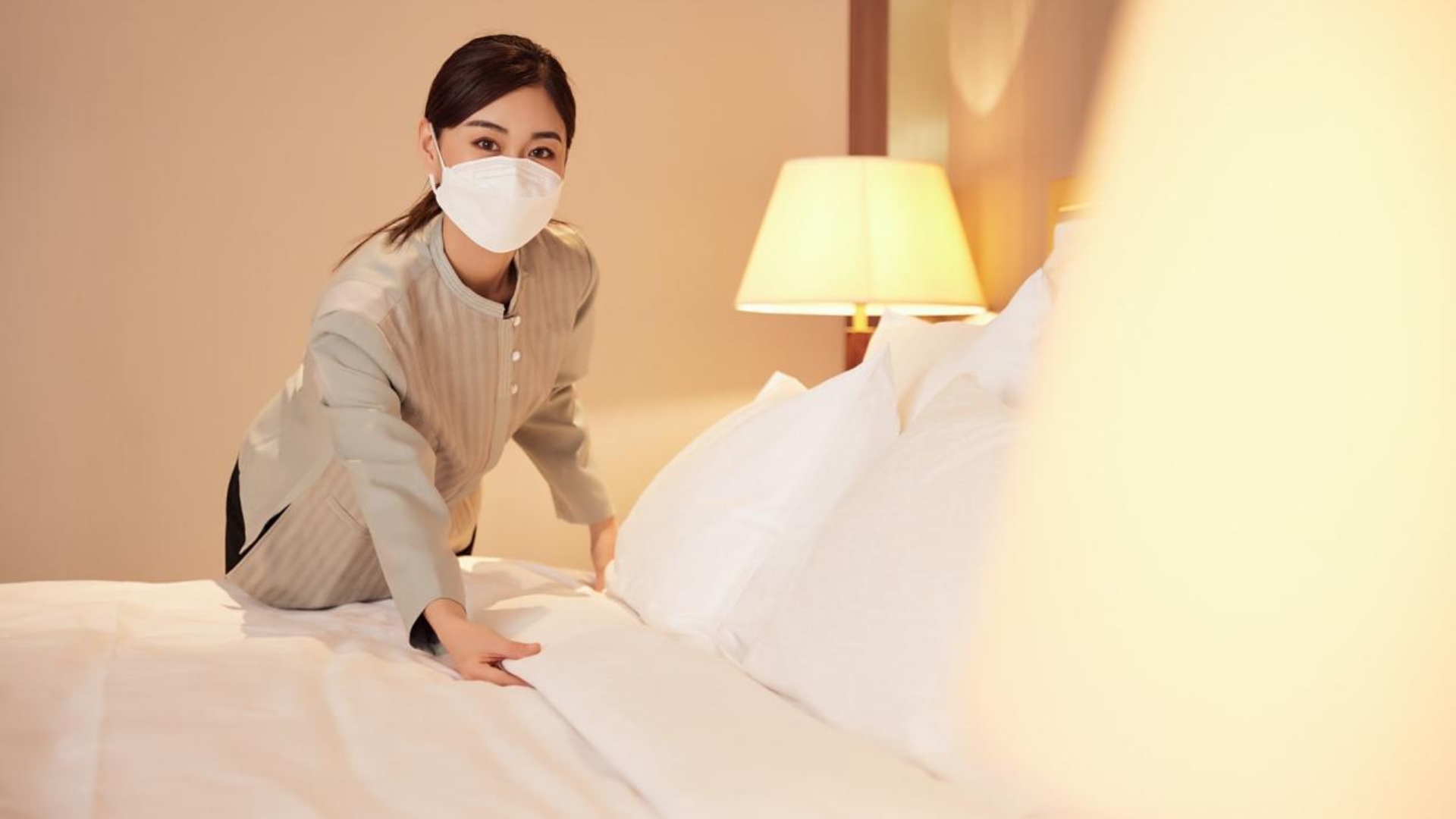
Laundry plants should help hotels organize the room attendant training and clarify the collection standards to improve the employees’ responsibility and profeesional quality.
Staff should never use linen to wipe the ground and the dirty areas of the table.
Also, hotels should strengthen on-site supervision and inspection to ensure that staff obey the operational norms well.
● Classification and collection
At the soiled linen collection site in hotels, classification collection devices such as classification baskets and woven bags should be set up for preliminary sorting of the linen. This prevents it from falling on the ground and cross-contamination.
● Packaging and transportation
Linen packaging materials and transportation tools with good sealing and strong protection should be used. During loading, unloading, and transportation, staff should cover the linen with dust covers and isolate it from the ground.
● Washing
Staff should use a targeted laundry process and chemicals according to the types of stains to improve washing efficiency. Reasonably adjusting the washing production plan can avoid additional contamination and retention of linen during the washing process.
During washing, intelligent laundry equipment can be used to standardize the laundry process. This avoids employees from deliberately shortening the washing process to speed up the linen washing, which may lead to an increase in the backwash rate and even affect the service life of the linen. The CLM tunnel washer can provide standardized washing. Staff only need to load linen and choose a washing program. The following washing to drying doesn’t need manual participation, so there is no manual shortening of the washing process. As a result, laundry plants can reduce the rewash rate caused by human causes.
● Linen quality inspection
A linen quality inspection system should be established to test the cleanliness and integrity of the linen. Linen that does not meet the standards should be removed in time before it is put into use.
● Communication and feedback
Laundry plants should communicate with the hotels in time to know the usage and contamination of linen, optimize services based on feedback, and provide targeted solutions.
Conclusion
The recontamination of linen seems small, but it brings serious operational risks and economic losses to laundry plants and hotels. Laundry plants and hotels must improve awareness together, take systematic preventive measures, and remove potential risks from the source. This helps achieve cost reduction and efficiency improvement. Only when laundry plants and hotels work together to establish a long-term mechanism can they provide better textile laundry services and avoid unnecessary losses for both parties.
Q&A
Q1: How to ensure standardized washing processes without a tunnel washer?
A1: Intelligent industrial washing machines can be used, such as the Kingstar heavy-duty industrial washers manufactured by CLM. These machines can store up to 50 standard washing programs. When used together with a chemical dosing system, fully automatic washing of the full process can also be achieved.
Q2: How to remove mold spots from linen?
A2: You can use chlorine bleach, then rinse the linen completely.
Or, you can use potassium permanganate.
dissolve it into dark purple liquid → apply to the mold spots → leave for about 20 seconds → rinse → use peroxide and acetic acid to remove remaining brown stains
Q3: Why is hotel linen almost pure white?
A3: Whiteness gives people a clean and tidy impression and does not easily hide dirt. Guests don’t have to worry about hygiene issues because any dirt can be seen at a glance.
White linen is also easy to wash. Most stains can be removed with chlorine bleach or oxygen bleach, which is ideal for large-scale washing.
In addition, white linen matches well with the overall hotel interior design.
In the hotel textile laundry industry, the recontamination of linen is a common but easily neglected problem. It damages the cleanliness and beauty of linen. Also, it is the main reason for increased laundry costs and wear and tear. Laundry plants should face up to this problem, work together with hotels to take effective measures to remove the recontamination of linen from the source, upgrade laundry operations, control costs, and improve service quality.
Symptoms and Reasons
Recontamination of linen is the additional contamination of linen caused by improper operations during collection, packaging, transportation, and other processes after use.
● Common symptoms
- Shoe prints and dust
Linen is stepped on, or it comes into contact with the floor.
- Oil stains and cosmetics
Linen is mistakenly used for wiping. Food and soup sprays on the linen.
- Mold spots and odors
Linen is stored improperly in humid environments.
- Cross-contamination
Clean linen mixes with soiled linen.
● Reasons
The causes of linen recontamination are diverse.
- Staff are lacking in responsibility, and their operations are not standard.
- The sorting, collection, and storage of linen are not proper.
- Transport tools, linen carts, and other containers are dirty and have insufficient protection.
- The linen turnover process is unreasonable, and it has poor coordination between procedures.

Impact on Laundry Plants
The recontamination of linen has a serious impact on the operation of laundry enterprises and hotels’ service quality.
● Increased washing costs
To remove stubborn stains, staff should add more detergents and extend the washing time. This needs more labor and materials, and causes increased washing costs.
● Intensified linen wear and tear
Frequent use of strong detergents damages textile fiber and shortens the service life of linen. The rising scrap rate of linen causes the procurement costs to increase accordingly.
● Decreased satisfaction rate
The cleanliness of linen directly has an impact on the customers’ experience. The linen with residual stains easily leaves customers with an unprofessional impression and damages the image of the hotel.
● Increased difficulty of hotel management
The recontamination increases the uncertainty of the hotel linen usage. The frequency of changing linen becomes higher, and the demand for spare quantities has risen, so the difficulty of inventory management has also grown.
Measures for Recontamination
The prevention of recontamination of linen needs the cooperation of laundry enterprises and hotels. The standardized management systems and operation process should be established, from use, collection, to delivery.
● Linen turnover process
The whole process of linen from use to washing should be optimized to optimize the connections and reduce unnecessary handling and retention of linen to reduce the risk of contamination as much as possible.
● Training and management of staff
Laundry plants should help hotels organize the room attendant training and clarify the collection standards to improve the employees’ responsibility and profeesional quality.
Staff should never use linen to wipe the ground and the dirty areas of the table.
Also, hotels should strengthen on-site supervision and inspection to ensure that staff obey the operational norms well.
● Classification and collection
At the soiled linen collection site in hotels, classification collection devices such as classification baskets and woven bags should be set up for preliminary sorting of the linen. This prevents it from falling on the ground and cross-contamination.
● Packaging and transportation
Linen packaging materials and transportation tools with good sealing and strong protection should be used. During loading, unloading, and transportation, staff should cover the linen with dust covers and isolate it from the ground.
● Washing
Staff should use a targeted laundry process and chemicals according to the types of stains to improve washing efficiency. Reasonably adjusting the washing production plan can avoid additional contamination and retention of linen during the washing process.
During washing, intelligent laundry equipment can be used to standardize the laundry process. This avoids employees from deliberately shortening the washing process to speed up the linen washing, which may lead to an increase in the backwash rate and even affect the service life of the linen. The CLM tunnel washer can provide standardized washing. Staff only need to load linen and choose a washing program. The following washing to drying doesn’t need manual participation, so there is no manual shortening of the washing process. As a result, laundry plants can reduce the rewash rate caused by human causes.
● Linen quality inspection
A linen quality inspection system should be established to test the cleanliness and integrity of the linen. Linen that does not meet the standards should be removed in time before it is put into use.
● Communication and feedback
Laundry plants should communicate with the hotels in time to know the usage and contamination of linen, optimize services based on feedback, and provide targeted solutions.
Conclusion
The recontamination of linen seems small, but it brings serious operational risks and economic losses to laundry plants and hotels. Laundry plants and hotels must improve awareness together, take systematic preventive measures, and remove potential risks from the source. This helps achieve cost reduction and efficiency improvement. Only when laundry plants and hotels work together to establish a long-term mechanism can they provide better textile laundry services and avoid unnecessary losses for both parties.
Q&A
Q1: How to ensure standardized washing processes without a tunnel washer?
A1: Intelligent industrial washing machines can be used, such as the Kingstar heavy-duty industrial washers manufactured by CLM. These machines can store up to 50 standard washing programs. When used together with a chemical dosing system, fully automatic washing of the full process can also be achieved.
Q2: How to remove mold spots from linen?
A2: You can use chlorine bleach, then rinse the linen completely.
Or, you can use potassium permanganate.
dissolve it into dark purple liquid → apply to the mold spots → leave for about 20 seconds → rinse → use peroxide and acetic acid to remove remaining brown stains
Q3: Why is hotel linen almost pure white?
A3: Whiteness gives people a clean and tidy impression and does not easily hide dirt. Guests don’t have to worry about hygiene issues because any dirt can be seen at a glance.
White linen is also easy to wash. Most stains can be removed with chlorine bleach or oxygen bleach, which is ideal for large-scale washing.
In addition, white linen matches well with the overall hotel interior design.
Post time: Mar-13-2026