
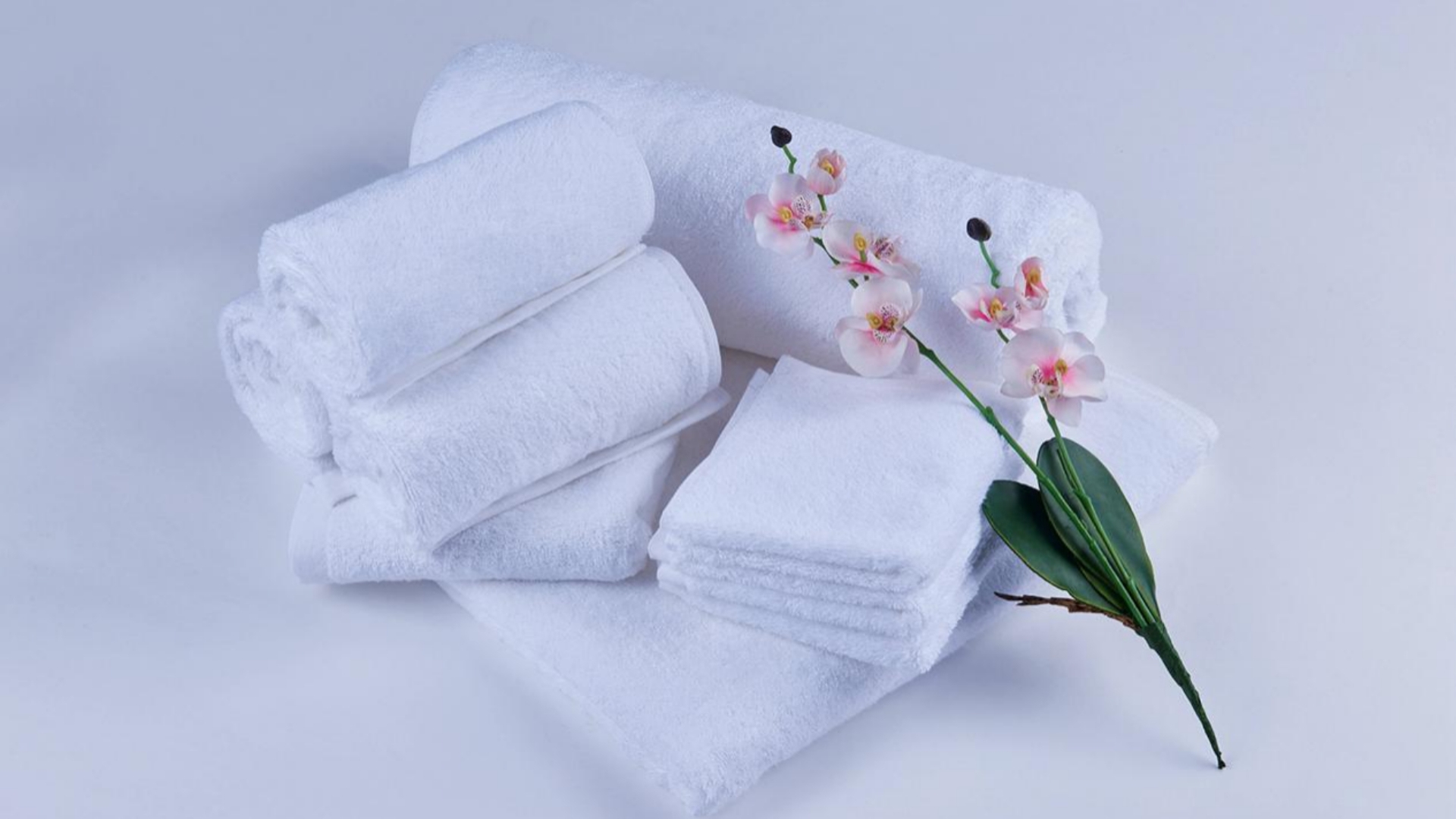
Many laundry plants often face the problem that hotel linen tears easily when handling items that are in the late stage of their service life. Why on earth is this so? In fact, hotel linen itself has a service life. Scientific washing and maintenance can effectively extend its service cycle and reduce the damage rate.
Common Damage Types
The damage conditions of pure cotton and cotton-polyester are different.
Pure cotton: small holes, cracked corners, peeling of folded edges, thinning and easy breakage of fabric, cloudy color, and decreased softness of towels.
The cotton-polyester: darker colors, falling off of cotton fibers, loss of elasticity, cracked corners, peeling of folded edges.
If the above conditions occur, it is suggested to investigate the reasons and replace the linen. Generally, the reference washing times for various types of linen are as follows.
● 100% cotton bed sheets and pillowcases
130–150 washes
● Blended bed sheets and pillowcases (65% Polyester, 35% Cotton)
180–220 washes
● Towels
100–110 washes
● Tablecloths and napkins
120–130 washes
Common Reasons for Linen Damage
● Improper washing operations
- Wrong timing of chemical addition
This condition often occurs when people use industrial washing machines. Staff add chemicals, especially bleaching agents, when the water in the machines is insufficient. This easily causes the local concentration of chemicals and damages linen. If a tunnel washer is used, there will be no such problems because the washing, detergent addition, and other programs are all controlled by a computer.
- Improper use of bleaching agents
The extremely high temperature, high concentration, or too many residues of chlorine bleaching agents during washing easily cause color fading and holes in the linen. Oxygen bleaching agents replacing the chlorine bleaching agents is much safer.
- Corrosive chemicals
If the linen accidentally gets contaminated with corrosive substances such as strong acidic cleaners and people fail to clean it in time, it will seriously damage the fibers.
- Wrong mixing of detergents
The mixed use of different chemicals or detergents or wrong addition may cause chemical reactions that damage linen.
● Equipment and human factors
- Laundry equipment problem
If the inner drum of an industrial washing machine or laundry drum has burrs or is not smooth, it is easy to scratch the linen during washing. This causes yarn extraction and holes.
- Incomplete sorting
Staff haven’t done the linen sorting carefully before washing. Sharp debris mixed in and directly cut through the linen.
- Improper handling operations
When loading and unloading linen, excessive force or colliding with sharp objects can cause punctures or snags.
- Insufficient rinsing and cleaning
This situation is also more likely to occur when using industrial washing machines. If employees do not operate the washing process in a standardized manner, such as a long time of spin dry, insufficient rinsing times, or residual alkali or chlorine not being neutralized, it will all accelerate the aging of the linen.
Method of Effectively Avoiding Linen Damage
● Standardized use of detergents
Staff should pay attention to: the correct feeding time and temperature, the characteristics of detergents, avoid mixing detergents, timely neutralization of residual alkali and chlorine, and prevent the linen from coming into contact with strongly corrosive chemicals.
This situation can be regulated by setting the washing program to standardize the washing process. The CLM tunnel washer can be used in conjunction with many chemical dispensers. Our engineers will pre-edit the washing processes for different types of linen to ensure that the entire washing process is scientific and reasonable. Moreover, the CLM tunnel washer adopts a double-chamber insulation design to keep the water temperature at a reasonable level all the time. This ensures the best effect of the melting material.
● Sorting before washing
People should sort the linen by material and color, and thoroughly clean out debris and sharp objects.
The inner drums of the CLM tunnel washers are all welded by robots to ensure that the welding process is completed without any welding slag residue. After the welding is completed, we will also do a quality inspection to ensure the smoothness and cleanliness of the inner drum. Before the linen enters the tunnel washer for washing, it will all be weighed on the weighing platform to ensure that the washing volume of each batch is within a reasonable range, so that there are no washing problems due to overloading.
● Separate treatment of new linen and old linen
The old linen and new linen should be washed separately, and the dehydration time should be adjusted. For linen approaching the end of its service life, if an industrial washing machine is used, the high spin speed and high spin time can be appropriately reduced. If a tunnel washer is used, the pressure of the press can be appropriately lowered to extend the service life of the linen as much as possible.
● Avoid the fatigue of linen
After washing, linen should be allowed sufficient rest time. We recommend an interval of at least 24 hours before reuse. This helps restore fiber toughness and extend service life. Hotels should configure linen at a ratio of no less than 1:3, so that linen rotates through three states: in use, being washed, and resting. This practice effectively prolongs the service life of linen.
Conclusion
By the above measures, the abnormal linen damage rate is greatly lower. The implementation of the above measures can greatly reduce abnormal damage to linen and extend its service life. The tasks in a laundry factory are meticulous and complex, and they need precise control over every link. Especially for laundry factories that offer shared linen, extending the service life of the linen by one month can greatly reduce the procurement costs of the laundry factory and improve its operational efficiency.
Q&A
Q: How can scientific washing be achieved for linen in homestays where the number of rooms is small, and the flow of guests is unstable?
A: Many home stay facilities choose to wash by themselves. But, due to the insufficient equipment and the professional knowledge, they often could not reach the requirements of scientific washing, so they can consider shared linen. Laundry plants provide clean, hygienic linen, and homestays pay for the washing service.
Q: What causes vertical stripes on linen after ironing?
A:
Incomplete rinsing leads to chemical residue, which scales on the roller.
The ironing belts on the flatwork ironer are uneven.
The speed adjustment between front and rear equipment on the ironing line is unreasonable. The results in unsmooth linen operation and the formation of vertical wrinkles or stripes.
Q: What type of linen cart should laundries choose?
A: Common types are made of fiberglass, stainless steel, or plastic.
Fiberglass carts are easily damaged, and broken fiberglass carts scratch linen. So they have gradually been phased out.
Stainless steel carts are relatively heavy, and welding detachment can also scratch linen.
Plastic linen carts are preferred by more laundries for their light weight and durability. However, when selecting, people should pay attention to the wheel material. The wheels should be wear-resistant and quiet. Easily damaged wheels will shorten the overall service life of the cart.
Post time: Feb-16-2026