
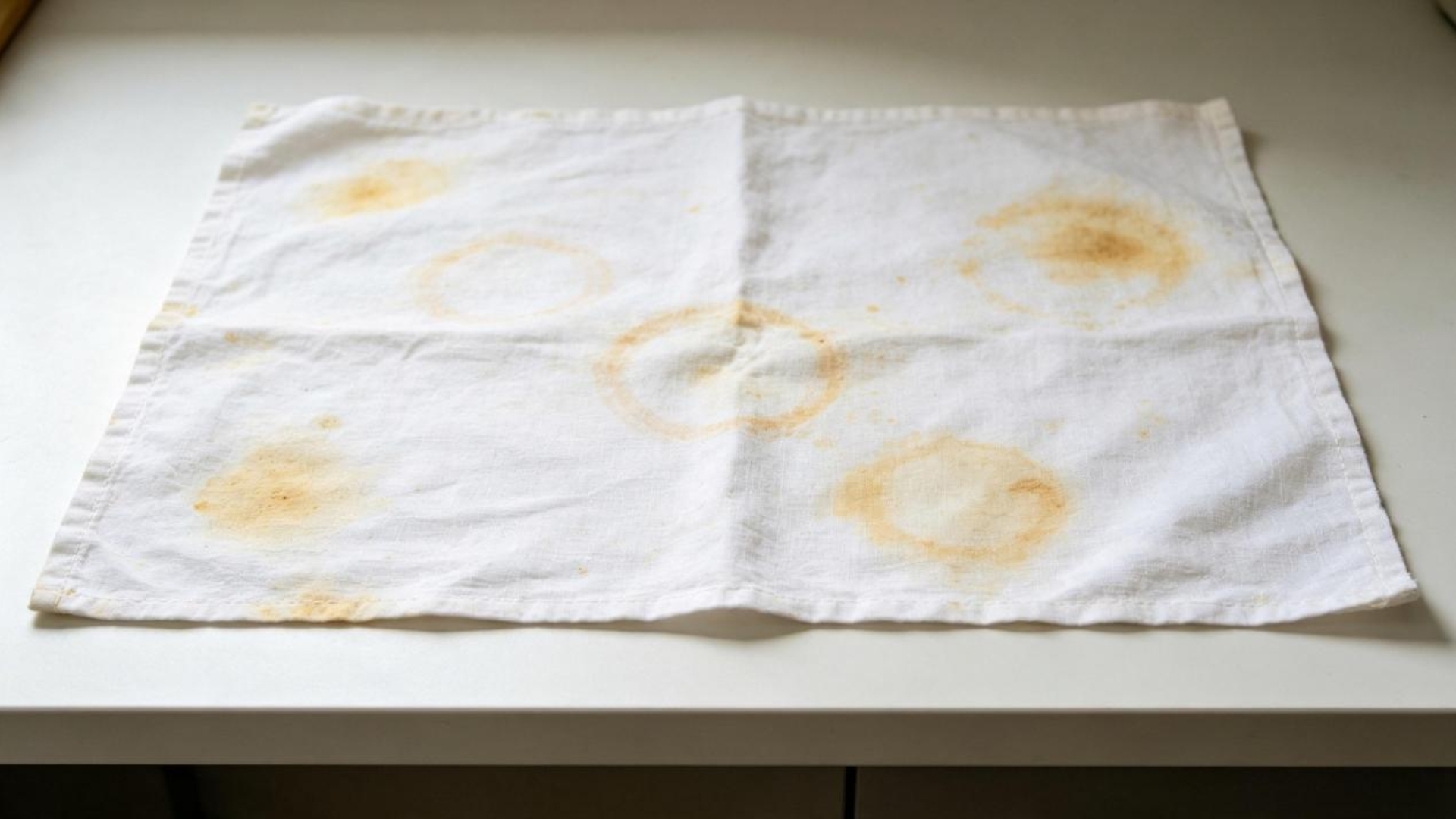
A common quality issue always exist in the hotel linen laundry industry. After washing, linen is white and clean without any visible stains. However, irregular yellow stains appear on the linen after high-temperature ironing. This issue can cause disputes between hotels and laundry service providers all year round. It not only affects guest room appearance and guest experience but also accelerates linen aging and replacement. This can also significantly increase the hidden operational costs of laundry plants. Actually, these yellow stains are not surface dirt residues. They are hidden stains trapped inside fibers. They can become visible after high-temperature oxidation. They are often overlooked by most standardized laundry plants during operations.
Many laundry operators have such a misconception. They only evaluate linen cleanliness with the naked eye. However, hidden stains (such as body oils and sebum, chemical residues, metal ions, and coagulated protein residues) can be embedded in cotton fiber gaps. They are invisible under normal temperature and humidity conditions. If linen is ironed at temperatures above 160℃, these stains can quickly oxidize and carbonize. Yellow stains become visible immediately. They have been a quality challenge in the laundry industry.
Four Core Causes
Linen ironing yellow stains result from four core causes.
● Skincare and body oil residues
This is the most common cause. Residual sunscreen, facial cream, hair oil, and body oils can penetrate deep into linen fibers. Regular washing can only remove surface oil stains. Thin oil films may still remain on the linen. They can carbonize and discolor after high-temperature ironing. These stains often appear randomly on pillowcases and bed sheets.
● Chemical residues and insufficient rinsing
To reduce water and energy costs and improve cleaning efficiency, some laundry plants use excessively strong alkaline chemicals and laundry powders. They also reduce rinsing cycles. Alkaline chemical residues can be trapped in fibers. They are invisible under humid conditions. However, they quickly turn yellow after high-temperature ironing. These residual chemicals also continue to damage fabrics. This can cause reduced linen whiteness, stiff hand feel, and linen aging.
● Iron ions and equipment rust contamination
In old laundry plants, hard water, corroded washing drums, and steam pipelines can cause a large number of free iron ions. They can deposit on linen surfaces. They are difficult to identify under humid conditions. But iron ions can turn into iron oxide under high-temperature conditions. They can become fixed-location yellow stains. Recurring yellow discoloration often occurs at the same position.
● Lack of protein-based stain pre-treatment
During high-temperature main wash cycles, protein stains (such as sweat and body fluid) can rapidly coagulate inside fibers without any pre-treatment. Surface stains can be removed from the linen. But the internal stains still remain. They can oxidize during high-temperature ironing processes. This may cause large-area yellow stains. Besides, improper chlorine bleaching or lack of neutralization can worsen yellowing.
Solutions for Yellow Stains
To thoroughly address yellow stains, laundry plants can use a full-process solution (pre-treatment, process optimization, equipment control, and standardized operations).
● Pre-treatment
During pre-treatment, heavily soiled linen should be separately sorted. Use dedicated emulsifying stain removers and low-temperature pre-wash for oil- and sweat-contaminated areas. This can remove protein and oil residues at the source.
● Washing process
Strictly control chemical dosage (such as strong alkaline chemicals and bleaching agents). Excessive chemical dosing should be prevented. Ensure the rinsing process. Add neutralizing acid to remove residual alkalinity inside fibers. Install water softening as well as purification systems. This can filter metal impurities. Rust-based yellow stains can also be reduced.
● Linen storage and ironing processes
Do not pile up wet linen after washing. Otherwise, hidden stains can worsen. Besides, linen should be spread out and dried quickly. Precisely control the ironing temperature. This can prevent fabric carbonization caused by sudden local temperature spikes.
● Post-treatment
Regular washing cannot remove oxidized yellow stains. Use low-temperature reducing stain removers for secondary treatment. Do not blindly increase bleach dosage. Otherwise, this can cause severe damage to linen fibers. It can also significantly reduce fabric service life.
Conclusion
In a word, most yellow stains are caused by low-cost, inefficient laundry processes. Hotels reduce laundry service pricing. Laundry plants simplify processes. Equipment lacks precise temperature control. Process control is also insufficient. These problems can convert into high hidden costs (such as linen aging, increased customer complaints, frequent rewash, and premature linen replacement). Linen quality depends more on washing processes than fabrics. Stable, standardized laundry systems are key to controlling quality and reducing losses.
Kingstar is a professional smart laundry plant system integrator. It specializes in the R&D of industrial equipment and overall plant planning. Kingstar provides core equipment, including tunnel washer systems, high-precision high-speed ironing lines, and smart overhead bag conveyor systems. It can offer full-process smart solutions for laundry plants worldwide.
Kingstar smart equipment supports precise temperature control and chemical dosing. It can ensure standardized rinsing as well as neutralization processes. This can reduce manual operation errors. Meanwhile, with overall plant planning experience, Kingstar can optimize the end-to-end process (sorting, pre-wash, washing, and ironing). This can prevent improper linen stacking, high-temperature carbonization, and residual contamination. Therefore, customers can achieve visible linen cleanliness and consistent quality. Ironing yellow stains can be reduced. It can also reduce operational losses as well as customer complaint risks.
Q&A
Q1: Why does linen look white after washing but turn yellow after ironing?
A1: Oil/alkaline/iron ion/protein residues can hide inside fibers. They are difficult to identify under normal temperature and humidity conditions. But they often become visible after high-temperature ironing. This is not caused by secondary contamination.
Q2: How to identify the causes of yellow stains?
A2:
Scattered random yellow stains: oil residues.
Large-area uniform yellowing: chemical residues.
Repeated yellowing in the same locations: water quality and equipment rust contamination.
Q3: Can old yellow stains be removed by increasing bleaching agents?
A3: No. Oxidized yellow stains require dedicated reducing chemicals. Increasing bleaching agents can only whiten the linen. However, excessive chemicals can damage linen fibers. They can also accelerate fabric aging and damage.
Post time: Sep-23-2026