
In the operation of linen washing, nothing frustrates laundry plant owners more than discovering large patches of yellow stains right before delivery. Cleanliness is the bottom line. Once yellow stains appear, they lead to rework, linen scrapping, and compensation claims. Worse still, they trigger hotel complaints, result in terminated cooperation, and damage the plant’s reputation forever.
Many laundry plants faced such emergencies. Thousands of sets of hotel linen mysteriously develop yellow stains after washing, drying, and ironing. Repeated rewashing fails to remove the marks completely, and it severely delays delivery. Most operators first suspect water quality, chemical detergents or washing procedures. However, they overlook three hidden risks of the laundry equipment. These hidden hazards are unnoticed in daily operation. Once they break out, they cause mass quality issues.
Drawing on many on-site troubleshooting cases, Kingstar Automation analyzes three real causes of linen yellow stains and provides targeted solutions. This helps laundry plants remove problems at the source and maintain consistent quality standards.
Factor 1
Most yellow stains are not from the washing process. They form during ironing.
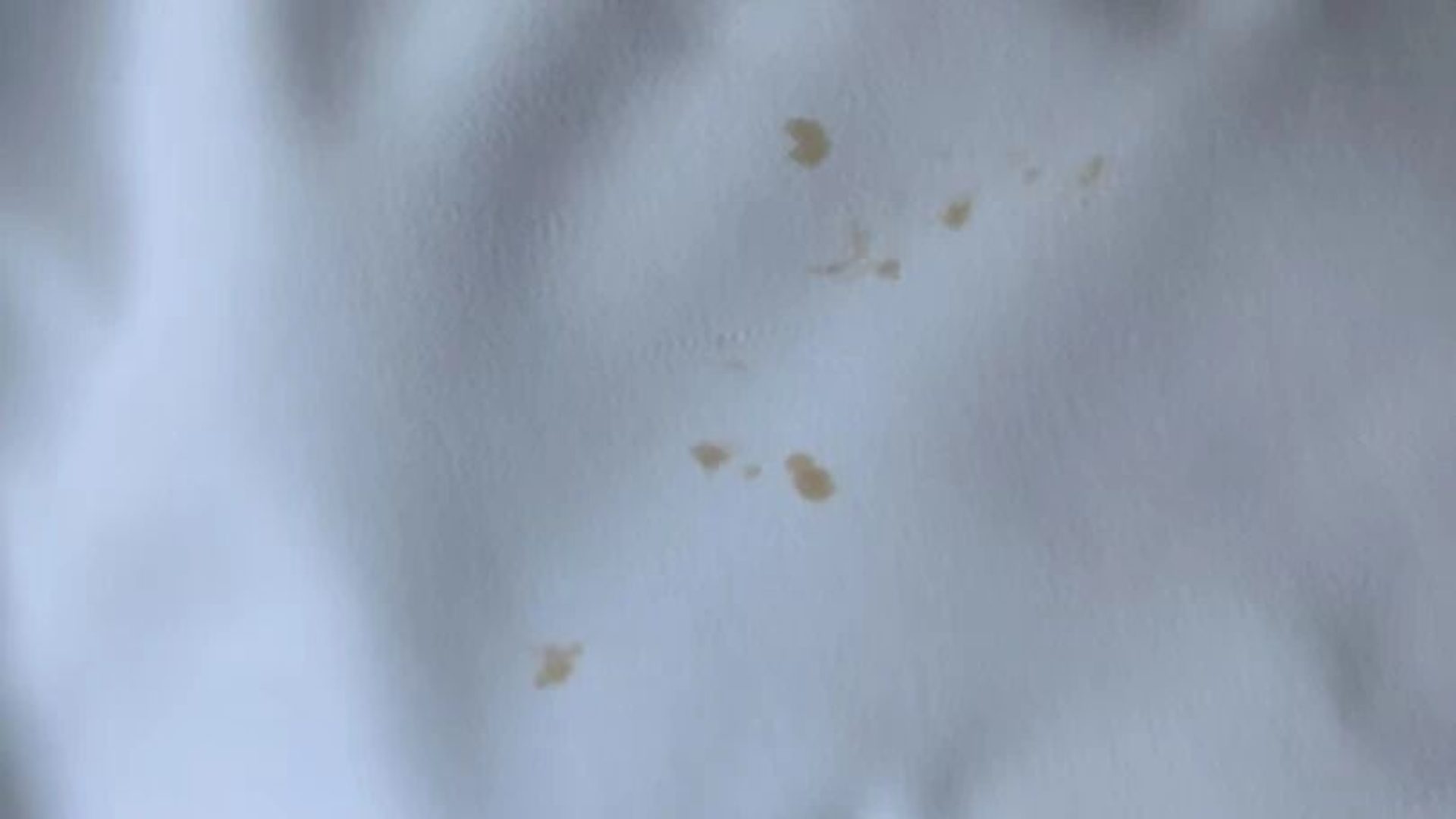
Linen still has moisture after washing and generates massive steam quickly inside the high-temperature ironer. When rising steam touches the relatively cool inner wall of the dust cover and protective cover, it condenses rapidly into water droplets. Workshop fiber debris, dust, and oil contaminants adhere to the droplets and form wastewater drops. When the droplets grow heavier, they drip vertically onto linen passing through the ironer at high speed.
Under high temperature and pressure during ironing, these water droplets penetrate instantly into the fabric fibers and get locked inside. They form irregular yellow spots and patches. Such stains are very difficult to remove in washing. Rewashing and re-ironing only make the marks more stubborn.
Many laundry plants never clean the upper cover of the ironer until massive yellow stain problems occur.
● Solutions
– wipe the inner wall of the dust cover daily before startup to remove condensed water and surface dust
– install diversion grooves or drainage pipes to guide condensed water into an external collection bucket
– check the sealing condition of the cover regularly and replace damaged parts in time
– maintain proper workshop ventilation to reduce steam accumulation and condensation
Factor 2
When purchasing equipment, many plant owners focus on ironing speed and price and ignore roller material. Some low-cost equipment uses ordinary iron or painted rollers. In long-term high-temperature, high-humidity and steam-filled environments, the paint layer easily wears and peels off, and steel oxidizes and rusts rapidly.
Linen is constantly in contact with rollers during conveyance. Rust adheres directly to the linen surface and forms dot-shaped, strip-shaped, and patchy yellow stains. More seriously, rusty roller surfaces are rough and uneven, so they scratch linen fibers and cause invisible damage. This eventually leads to fraying and holes during subsequent use.
Such yellow stains appear randomly with no fixed position. They are often misjudged as washing-related stains. This results in ineffective repeated rework.
● Solutions
– check rollers weekly, polish lightly rusted areas, and apply anti-rust oil.
– replace severely rusted rollers
– wipe dry all rollers after daily operation
– purchase equipment with 304 stainless steel rollers
Kingstar Automation Super Roller Ironers have high-precision 304 stainless steel rollers. Precision-machined ironers have excellent rust resistance, corrosion resistance, and ultra-smooth surface. This removes rust-induced yellow stains structurally and ensures long-term stable operation without damaging linen.
Factor 3
Industrial water has high levels of calcium and magnesium ions. If the water softening system works inefficiently, hard limescale will gradually form and harden on cylinder surfaces after long-term operation. Under high temperature and pressure, the built-up limescale reacts with linen fibers and residual detergent and forms yellowish-brown marks.
In addition, limescale creates uneven cylinder surfaces. When linen is ironed at high speed and pressure, it suffers constant friction and abrasion. This causes yellow stains and leads to tiny holes, fiber snagging, and fabric thinning. It greatly shortens linen service life.
● Solutions
– keep the water softening system running steadily and strictly control water hardness
– clean cylinders and rollers regularly with dedicated descaling agents (citric acid)
– polish and repair cylinder surfaces periodically to maintain smoothness
– choose cylinders with precision-ground surface treatment to reduce the adhesion of impurities
All cylinders on Kingstar Automation Super Roller Ironer undergo high-precision anti-rust grinding treatment. The ultra-smooth surface resists residue buildup of detergent, limescale, and fiber debris. It greatly lowers the risk of linen contamination and damage, and delivers cleaner, more stable finished results.
Daily Prevention and Equipment Selection
Over 90% of large-area linen yellow stains are not caused by flawed washing processes, but by inadequate equipment maintenance and improper equipment selection.
Reliable laundry plants do well in washing, stain prevention, fabric damage control, and risk avoidance.
● Daily routine
Check the condition of ironer covers, rollers, and cylinder surfaces.
● Weekly routine
Remove limescale, check for rust, and clean transmission parts.
● Long-term strategy
Invest in professional equipment with stability, durability, rust resistance, and high surface smoothness.
Remedial costs are very high after quality accidents happen. Advance prevention only needs standardized workflows and reliable equipment. For laundry plants, a stable, trouble-free ironer is a guarantee of profit.
Conclusion
Kingstar Automation Super Roller Ironer is fully optimized in roller material, cylinder craftsmanship, structural waterproofing, and steam diversion. It helps global laundry plants reduce failure rates, improve first-pass qualification rates, and secure long-term trust from hotel clients.
Q&A
Q1: Linen comes out clean after washing but develops yellow stains after ironing. What are the reasons?
A1: It is most probably caused by three issues: condensed water dripping from the ironer dust cover, rusty conveyor rollers, and limescale on cylinders. People should first check these three areas for quick troubleshooting.
Q2: Why can’t repeated rewashing remove existing yellow stains?
A2: These yellow stains are inside the fibers under high temperature and pressure during ironing. They become heat-set stains that cannot be removed by ordinary rewashing. Prevention at the source is important.
Q3: What is the simplest and most effective way to prevent cylinder limescale?
A3:
– The water softening system should operate normally.
– Weekly descaling and cleaning keep cylinder surfaces smooth. This will greatly reduce limescale-related yellow stains.
– When selecting laundry equipment, laundry plants should confirm with the manufacturer whether the cylinders have undergone special anti-rust grinding treatment.
Post time: May-13-2026