
In traditional perception, laundry factories often represent labor-intensive, high-energy-consuming, and harsh working conditions. Problems such as human resource shortage, continuous cost increase, quality fluctuation, and poor management have long restricted the development and scale upgrading of enterprises.
However, with the continuous maturation of the Internet of Things, big data, artificial intelligence, and robotics technology, a deep industrial transformation is quietly taking place. Intelligent and unmanned laundry factories are accelerating their implementation. This new model is transforming the traditional experience-dependent washing method into a refined and automated operation system driven by data and algorithms. This brings unprecedented value to laundry enterprises.
Manpower
● The core value is reduced or unmanned operation.
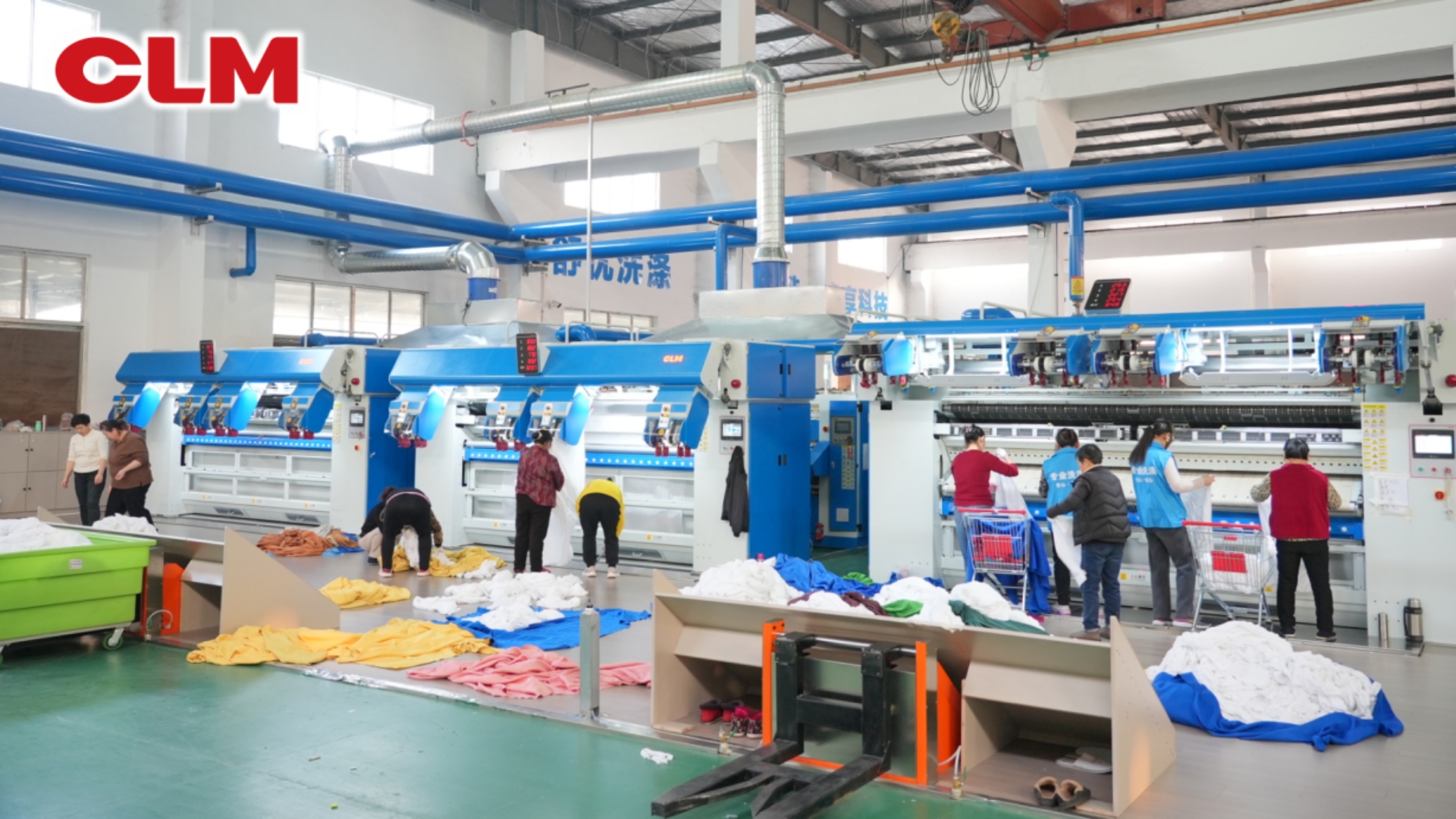
Labor costs have always been one of the main operational burdens for laundry enterprises. Difficulty in recruitment and retention of workers is a common problem in the laundry industry. The intelligent laundry factory has achieved full-process automated operation from the entry of linen into the factory, sorting, washing, drying, ironing, folding, and storage through the deep integration of the central control system, automated logistics lines, and robot sorting and loading systems.
Under this model, labor costs can be reduced by up to approximately 80%. Front-line operation positions have greatly reduced, and in some scenarios, it is even an unmanned operation. This basically reduced the labor pressure caused by the working environment. Also, managers can be liberated from the cumbersome on-site scheduling and can focus their energy on more valuable business decisions and efficiency optimization.
Efficiency
● The core value is that the overall efficiency has increased by 30% to 50%.
The reduction of human intervention actually means a great decrease in production uncertainty. The automated system can operate continuously for 24 hours, with a high degree of coordination among various processes, tighter equipment connections, and smoother material flow. This effectively avoids efficiency losses caused by human differences, shift handovers, and fatigued work.
● Two results
– Greatly shortened production cycle
From order receipt to finished product dispatch, the overall time has been greatly compressed, so enterprises have a stronger emergency order response capability.
– obviously improved asset turnover rate
A faster washing pace means an accelerated turnover of linen, which can support a larger business volume under the same linen scale.
Cost
● The core value is that energy consumption costs are reduced by 20% to 30%.
In the traditional washing mode, the use of water, electricity, steam, and chemicals often relies on empirical judgment, which also brings a large amount of hidden waste. Digital and intelligent laundry factories achieve real-time monitoring and precise control of various resources through sensors and intelligent metering systems. The system can automatically match the optimal water volume, chemical material, and energy consumption parameters based on the material, weight, and stain degree of the linen. This is true on-demand supply, and it avoids overuse.
Meanwhile, through continuous analysis and optimization of historical energy consumption data, enterprises can constantly adjust the washing process to achieve a long-term reduction in energy consumption. This reduces costs and further strengthens green operation capabilities.
Stability
● The core value is that reduced downtime losses ensure continuous production.
Sudden equipment shutdowns have always been a key risk point affecting production stability. In a digital and intelligent laundry plant, by the real-time collection and analysis of the operating data (vibration, temperature, current…), the system can identify the potential problems in advance and achieve an early warning mechanism. This means that enterprises can shift from repairing equipment only when it breaks down to addressing problems before they occur. Incorporating maintenance activities into the planning system can prevent losses caused by production disruptions.
Also, the service life of equipment operating in the best condition will be effectively extended. This greatly reduces the cost of asset input in the long term.
Quality
● The core value is stable quality and traceable process.
Washing quality is one of the core competitiveness in the enterprises. The digital and intelligent laundry factory solidifies the mature washing process into standardized procedures. Every operation is strictly done according to the set temperature, time, and mechanical force parameters. This reduces the fluctuations caused by human factors.
The final result is that no matter which shift or batch it is, the linen leaving the factory maintains a consistent high standard. Once a problem occurs, the system can also quickly trace back to specific batches, equipment, and process parameters and help technicians quickly locate the cause and complete closed-loop optimization. It makes quality management truly controllable, traceable, and optimizable.
Management
● The core values are transparent management and scientific decision-making.
The traditional management approach of decision-making based on experience is gradually being replaced by data-driven methods. In a digital and intelligent laundry factory, key indicators such as production status, equipment efficiency, energy consumption, and order progress are all presented in real time in the central system in the form of data. Managers can keep track of the overall operation of the factory at any time and achieve true one-screen control.
More importantly, through continuous analysis of data, enterprises can accurately identify the bottleneck links in the process, provide a clear direction for subsequent optimization, and shift management from passive response to active optimization.
Customers
● The core value is customer experience and improved trust.
In the current service environment, what customers care about is not only the final outcome, but also whether the process is transparent and controllable. Digital and intelligent laundry factories can provide customers (such as hotels and hospitals) with visual tracking services for the entire process of linen washing. Customers can keep track of the status, location, and quality inspection of the linen in real time, just like checking logistics. This transparency ability will greatly improve customer trust.
In addition, an efficient, stable, and traceable service experience will further improve customer stickiness, build long-term cooperative relationships, and gradually form competitive barriers that are difficult to replicate.
Conclusion
Essentially, the digital and intelligent transformation of laundry factories is not just about machines replacing human labor, but rather a systematic upgrade covering business logic, production methods, and management systems.
Through a comprehensive reconstruction of key elements such as human resources, energy consumption, equipment, quality, management, and customer experience, digital and intelligent laundry factories are helping enterprises make a leap from traditional models to high efficiency, refinement, and intelligence. This promotes an overall improvement in core competitiveness.
Embracing this transformation is no longer an option but an inevitable path for laundry enterprises to move towards the future.
Post time: Apr-09-2026