
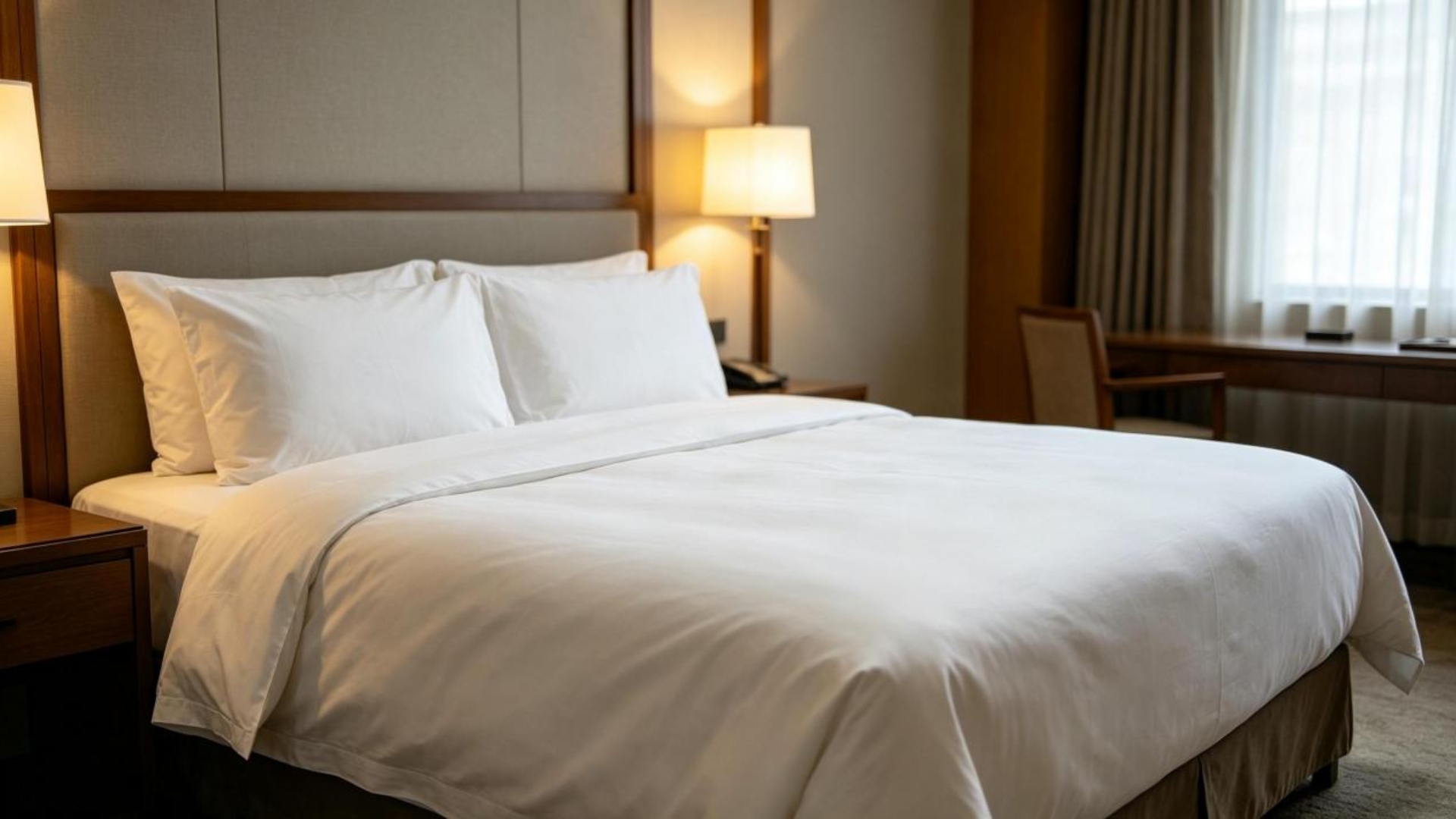
In industries with intensive linen use, such as hotels, hospitals, and airlines, “white means clean” is a deep-rooted concept. However, after the COVID-19 pandemic, the global laundry industry has faced a harsh reality. Visual cleanliness may be a false sense of security.
Visual Whiteness Does Not Mean Safety
Over the past few decades, the laundry industry has relied on a hygiene standard: visual cleanliness. Linen that is white, fresh, and soft is considered clean and safe. But research shows that seemingly clean linen may still have large amounts of biological contaminants, pathogens, or chemical substances.
The previous washing mode focused more on clean appearance and odor removal. The pandemic has revealed that pathogen reduction must be measurable and repeatable. This is also Kingstar’s concept. Real cleanliness should be based on scientific data rather than subjective judgment.
Three Misconceptions
● “Smells clean”means hygiene
Many hotels and medical institutions evaluate linen cleanliness based on smell. However, most bacteria and viruses are odorless. When noticeable odors occur, microbial growth may have reached a high level. More seriously, detergents and softeners can easily cover up odor. They create a false chemical impression of cleanliness.
Objective washing parameter validation systems should be built to solve this issue, such as time, temperature, chemicals, and mechanical action. Kingstar tunnel washer system is equipped with a PLC automatic control system. It ensures that the washing parameters of each batch of linen can be precisely controlled. The entire laundry process is traceable. It avoids odor-based judgment at the source.
● Washed means safety
Although the washing and drying process is proper, secondary contamination is also one of the risks that are easily underestimated in linen circulation. The hygiene results can be compromised at any time, such as storage, passageways, elevators, carts, and trucks.
Kingstar overhead conveyor system achieves end-to-end closed transportation, from linen sorting and washing to storage. It effectively separates clean and contaminated areas, which avoids cross-contamination. Kingstar also provides integrated smart laundry planning and design services. It helps customers build a complete and hygienic closed loop from the entrance to exit.
● Completing wash cycles means disinfection
Residual microorganisms, organic substances, and their metabolites remain after washing. Seemingly small mistakes may cause “visual cleanliness but not hygienically safe”, such as insufficient mechanical action, incorrect detergents, poor water quality, inadequate temperature, and overloading.
Kingstar offers high-speed ironing lines and drying systems. They feature precise temperature control components as well as efficient mechanical action. This ensures that each piece of linen has undergone sufficient physical disinfection.
Kingstar Solutions
As a laundry system integrator, Kingstar not only provides standalone machines but also develops full-process solutions for customers, from sorting, washing, drying, and ironing to delivery.
Kingstar’s core concept is: hygiene is a system, not a single step.
● Tunnel washer system
It precisely controls washing parameters. The microbial inactivation effect is measurable and repeatable.
● High-speed ironing line
It can achieve efficient thermal disinfection. Combined with automatic folding machines, it reduces the contamination risk caused by manual operations.
● Overhead conveyor system
Closed and automatic transportation thoroughly protects clean linen from contaminated areas.
● Integrated smart laundry planning
The hygiene management standards can be systematically improved from workshop layout and airflow design to personnel and material flow planning.
Conclusion
The future of the laundry industry is not determined by white linen or fresh smells. It depends on verified results, documented processes, and measurable safety.
Kingstar always believes that visual cleanliness does not mean safety. With advanced automatic equipment and system integration, Kingstar hopes to help customers move from visual satisfaction to hygienic safety.
Q&A
Q1: Why does visually clean linen not mean safety?
A1: Visual whiteness only shows the linen’s appearance. Microorganisms, pathogens, and chemical residues are invisible. They cannot be smelled. When microbial growth reaches a high level, linen may develop odor or yellow. Therefore, linen hygiene should be assessed by scientific testing (such as ATP and microbial culture testing), rather than by appearance.
Q2: Is linen storage and transportation important?
A2: Yes. Linen storage and transportation are as important as the washing process. After washing, linen may be contaminated again. Because it may be exposed to dirty areas, moisture, or uncleaned carts. Kingstar offers overhead conveyor systems and smart storage solutions. They can achieve closed transportation, cart management, and temperature and humidity control. This maintains linen hygiene from washing to final use.
Q3: Do small and medium laundry plants need to use automatic systems?
A3: Yes. The industry standards and customer requirements are continuously increasing. Automatic systems not only improve efficiency but also ensure quality and safety. Based on customers’ actual capacity, site conditions, and budgets, Kingstar provides modular system integration solutions, such as small automation upgrades and smart transformation of the entire factory. It helps different laundry plants move from visual satisfaction to hygienic safety.
Post time: Aug-27-2026