
In the daily operation of the laundry plants, the air compressor system is an important basis for stable equipment operation. Ironers, folders, industrial washing machines, and auxiliary equipment (pneumatic valves, solenoid valves…) all need stable, clean, and dry compressed air. However, in actual use, many laundry plants face a common problem: the moisture content of the compressed air is too high.
After being compressed by the air compressor, the air has a higher temperature and a high moisture content. Once it enters the pipeline and the equipment that uses gas, much liquid water will form with the decrease in temperature. This causes rust, jamming, and air leakage in pneumatic components, and reduces steam quality and equipment efficiency. It may even lead to valve damage, pipeline corrosion, and production downtime, which brings unnecessary maintenance costs and losses.
This article introduces three common methods for laundries to remove moisture from compressed air.
Method 1: Install an Aftercooler
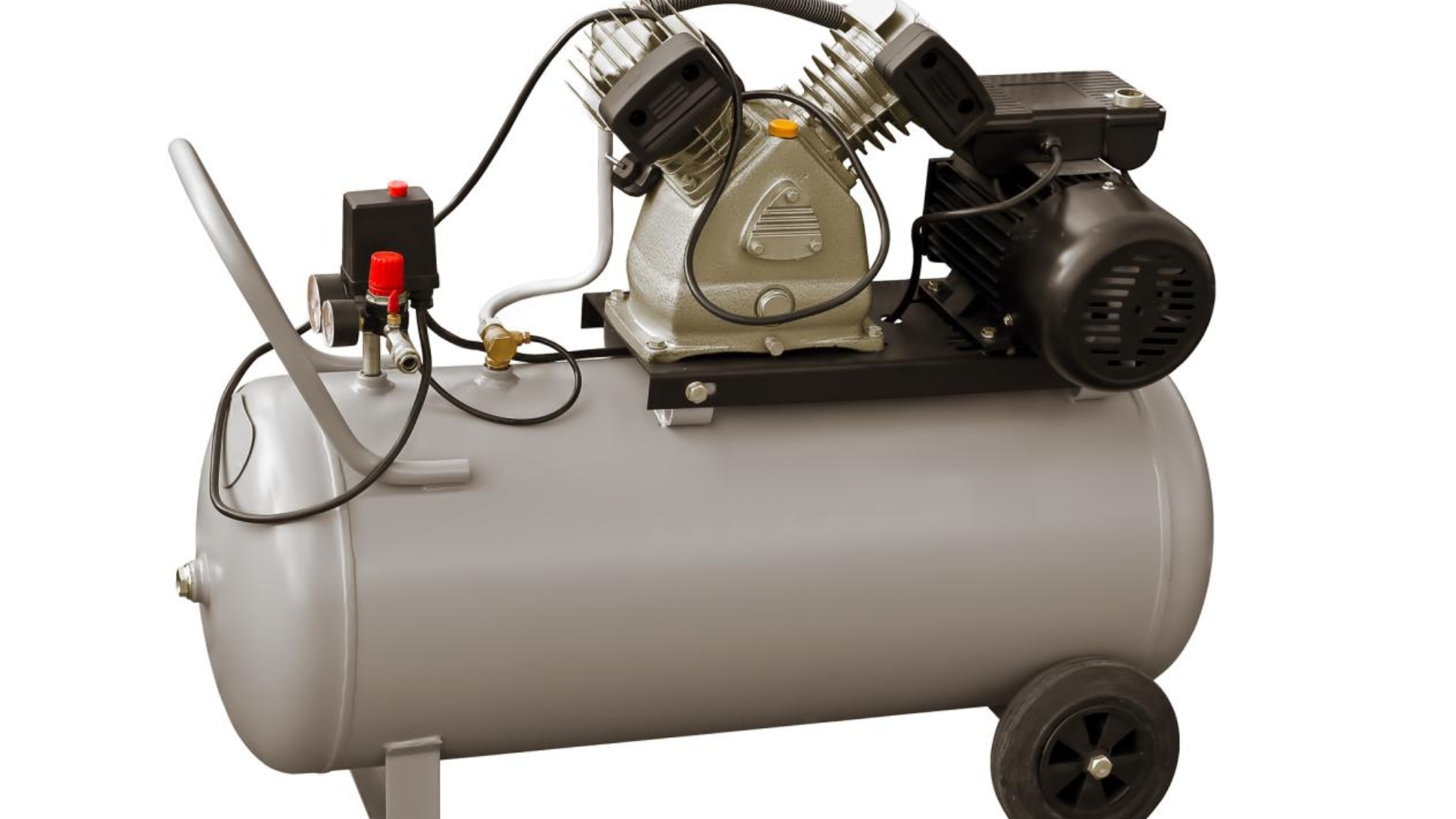
It is the most basic and widely used primary dehydration device that forcibly cools the high-temperature compressed air discharged from the air compressor. At high temperatures, air has more moisture that cannot be separated directly. The aftercooler rapidly lowers air temperature via air cooling or water cooling, causing water vapor to condense into liquid water, which is then separated by an air-water separator.
Most aftercoolers are equipped with automatic drains and steam traps to discharge condensed water in real time. This avoids the moisture from entering the downstream pipelines and gas-using equipment. Simple structure, convenient maintenance, and low cost of aftercooler are the first defense line for water removal, especially for small and medium-sized laundries.
Method 2: Install a Moisture Separator
It is an important air-water separation device in the compressed air pipeline. Its main aim is to remove liquid water droplets, oil droplets, and impurities in the air flow. The working principle is airflow rotation, collision, and gravity sedimentation to separate and discharge liquid moisture.
Currently, cyclone-type separators are popular in laundries. Internal spiral baffles change airflow direction, and they throw water droplets to the wall under centrifugal force for collection and drainage. They are easy to install, space-saving, and require no electricity, so they are ideal for secondary dehydration. However, they only remove large liquid droplets and cannot fully remove fine mist or saturated vapor. For better performance, they are usually combined with aftercoolers and dryers.
Method 3: Install an air dryer
It is the most effective solution for deep dehydration and high dryness. There are three main types of dryers.
● Refrigerated dryers
They cool compressed air through a refrigeration system. Also, they condense and drain moisture. Their simple structure, stable operation, and moderate power consumption are suitable for general use. However, their performance is affected by ambient temperature and humidity. Their dew points in hot and humid seasons are higher.
● Desiccant dryers
They use molecular sieves, activated alumina, or activated carbon to physically adsorb water vapor. Their high precision and low dew points can meet strict air quality requirements. They usually use a dual-tower structure with one working and the other regenerating. However, maintenance costs are high due to regular desiccant replacement.
● Combined dryers
They have the advantages of the former two dryers. They remove most moisture via refrigeration and deeply dry through adsorption. It saves energy and ensures high drying performance.
Conclusion
In summary, water removal from compressed air is important in laundry equipment management. A single method is often not enough. A combined system of aftercooler, moisture separator, and air dryer effectively reduces moisture content, extends equipment life, reduces failures as much as possible, and improves production stability.
Laundries should choose and configure the compressed air system based on production capacity, air requirements, and environmental conditions. The right installation and regular maintenance ensure long-term stable operation and reliable support for laundry production.
Q&A
Q1: Can Kingstar Automation make full-plant planning for laundries?
A1: Yes. With over 20 years of experience in manufacturing laundry equipment and abundant customer cases, Kingstar Automation can provide customized full-plant planning for laundries.
Q2: What is the linen washing process?
A2: Taking bed sheets and quilt covers as an example: inspection and sorting → stain removal → pre-wash → drainage → main wash → intermediate spin → rinse 1 → drainage → rinse 2 → drainage → neutralization → high-speed spin → ironing → packaging → delivery.
Q3: In which countries does Kingstar Automation have actual application cases?
A3: Kingstar Automation has customers in many countries, including Australia, Belgium, the United States, Canada, and others.
Post time: Apr-24-2026